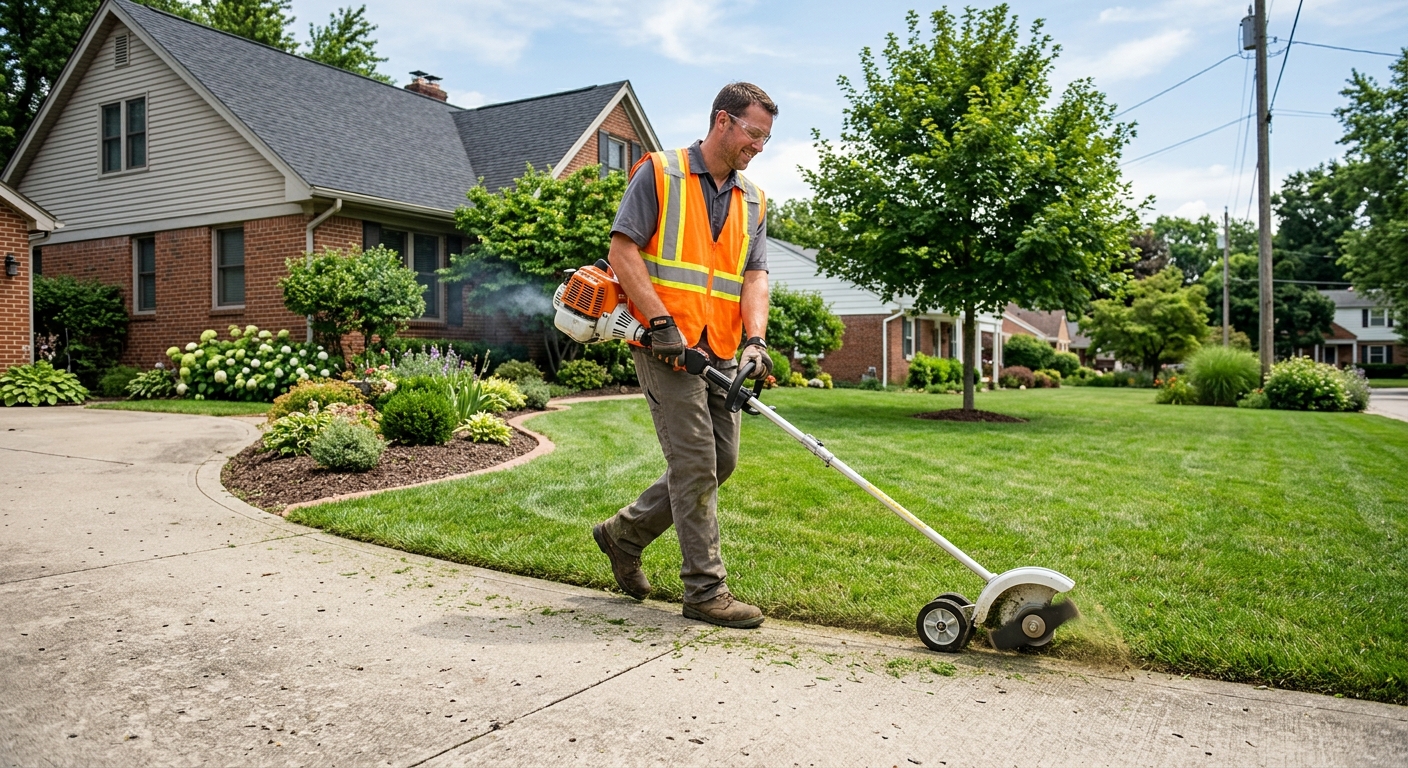
Landscaping options and costs in Port Hope
Port Hope homeowners typically have a lot of yard ambition—and the detached-house reality helps. With single-detached homes making up 72.2% of dwellings, many properties have the open space to justify full upgrades rather than small cosmetic touch-ups. And because 78.3% of households are homeowner households (Statistics Canada, 2021 Census), you’ll often see landscape projects treated as long-term investments: better curb appeal, improved drainage, and plantings that can handle winters.
In the Muskoka–Kawarthas region, most sites fall in plant hardiness zones 4b–5b, with last spring frost in early to mid-May and first fall frost in late September to early October. That compressed working window affects contractor scheduling and the speed at which sod, planting, and exterior concrete can be installed and established. Frequent freeze–thaw cycles also increase the importance of well-compacted bases and proper drainage under patios and retaining walls, which pushes labour and aggregate costs up compared with simple lawn work. You’ll notice demand is especially strong in older, established pockets like the downtown area and parts of the east end where landscaping often needs re-grading, deeper topsoil, or drainage fixes.
Below is a practical comparison of common options you’ll see in Port Hope, from fast lawn establishment to multi-surface hardscape and planting packages.
| Service |
Description |
Season |
Price Range |
| Full landscape design and installation |
Site visit, concept plan, layout, drainage/grading coordination, topsoil/soil plan, planting + hardscape installation (e.g., entry walkway and beds) |
May–late September (best results when concrete and plant establishment happen within frost-safe windows) |
$8,000–$35,000 |
| Sod installation (supply, grade, lay, roll) |
Minor grading, topsoil and amendment as needed, sod delivery and installation, rolling and initial watering plan |
Late April–early June; fall sod where access allows (September helps rooting) |
$2,000–$8,000 |
| Lawn seeding (grade, seed, starter fertilizer) |
Grading and prep, seed mix selection for shade/sun, starter fertilizer and light raking |
Late April–June; early September for best germination |
$1,200–$5,000 |
| Interlocking patio or walkway |
Excavation, base + compaction, edging, interlocking stone layout, bedding sand, jointing |
May–October (avoid wet installs that can undermine base compaction) |
$3,500–$15,000 |
| Retaining wall (interlocking block) |
Block wall build with proper granular base, drainage behind wall (weep holes/aggregate), and caps |
May–October |
$6,000–$40,000 |
| Tree and shrub planting |
Planting plan, soil amendments, staking/tying where required, mulch rings, and follow-up establishment care |
Early May–June and September (frost-safe establishment) |
$1,000–$8,000 |
Prices are estimates only and vary by project scope, site access and material selection.
What affects the price of landscaping in Port Hope
In Port Hope and the wider Muskoka–Kawarthas region, two homeowners can receive quotes for the “same” project that differ by 30–50% because the hidden drivers aren’t visible from the street. Hardscape and drainage are the usual culprits: one yard needs a deeper engineered base for frost heave control, while another only needs a light grade correction. Soil quality matters too—especially in older neighbourhoods where pre-1981 homes (63.7% of the housing stock) often have legacy grading, compacted fill, and inconsistent topsoil depths. Those factors change how much aggregate, topsoil, and labour a contractor needs.
Climate influences price in both what grows and how quickly crews can work. Plant hardiness zones 4b–5b determine plant survival requirements and winter protection, and the frost dates (early–mid May to late September/early October) limit your ideal installation window. In prairie regions contractors plan for shorter growing seasons with drought-tolerant palettes; in coastal BC you can typically install longer and lean into lush options, but drainage still rules. In Port Hope, freeze–thaw cycles mean deeper, well-compacted bases for patios, and drainage details behind walls become non-negotiable.
Concrete cost examples you’ll feel locally: (1) a simple lawn job might land in the $2,000–$8,000 band for sod, but if the site needs re-grading and subbase repairs the project quickly approaches the higher end. (2) a small interlocking walkway can stay mid-band when access is easy; add a retaining element or drainage bedding, and you can see retaining wall pricing rise toward the $6,000–$40,000 range. (3) More mature tree specimens cost more upfront and require heavier equipment, but they reduce the “wait time” to achieve privacy and screening.
| Price Factor |
Why It Matters |
Cost Impact |
| Yard size in sq ft — the primary cost driver for softscape |
More area means more topsoil, grading, seed/sod, mulch, and edging labour |
Often the biggest swing; can add thousands quickly on larger lots |
| Grading and drainage work — slope corrections add significant cost |
Freeze–thaw makes low spots heave; correct grading protects foundations and patios |
Can increase costs by 20–40% on sloped or pooling sites |
| Drainage bed or French drain installation |
Captures subsurface water and routes it safely; improves wall and basement moisture control |
Typically adds a material + excavation premium |
| Plant material tier — native shrubs vs. ornamental vs. mature specimen trees |
Plant size affects transport, handling, hole size, and staking labour |
Can range from budget-friendly to high-end pricing within the same plant type |
| Hardscape vs. softscape ratio — walls and patios cost more per sq ft than lawn |
Interlocking and block involve excavation depth, base prep, and precision finishing |
Shifts projects from lawn-like budgets toward higher totals |
| Irrigation system design and installation |
Sprinkler/drip layout must match soil type, slopes, and seasonal freeze considerations |
Often a meaningful add-on for larger lawns and bed zones |
| Soil amendment and topsoil required |
Compacted or rocky fill needs replacement or amendments for roots and long-term stability |
Can add disposal and haul costs depending on what’s removed |
| Tree removal or stump grinding before new planting |
Clears space and prevents future competition; requires careful scheduling and equipment |
Can increase both labour hours and equipment mobilization fees |
Permits & regulations in Ontario
In Ontario, most routine landscape work—such as planting, sodding, seeding, mulch installation, and most softscape upgrades—typically does not require a permit. Where permits come in is usually tied to structure height and drainage impacts. For example, retaining walls above a height threshold (often around 1.0 m / 3.3 ft in many municipalities) commonly require a building permit and may involve engineered drawings, especially for taller walls or complex conditions.
Also pay attention to grading. If a project changes lot grading in a way that affects drainage toward a neighbouring property or alters flows toward storm sewer connections, the municipality may require approval before construction. And before any digging for new planting holes, footings, or French drains, call for utility locates—this protects you and your contractor from damage to buried services.
For contractor compliance in Port Hope, start with three checks:
- Ontario licence status (if applicable): ask the contractor which trades/permits apply to your specific scope (especially if hardscape work includes structural elements).
- Liability insurance: request a current Certificate of Insurance naming you (or showing “additional insured” where offered).
- WSIB/WCB coverage: confirm the contractor is registered and insured for workers; ask for proof of clearance/coverage.
If you’re using irrigation, confirm any local water-use bylaws for drought conditions—even though those restrictions are most discussed in other provinces, Ontario communities can still restrict watering in hot, dry periods.
Planning a landscape that thrives in Port Hope's climate
Designing for Port Hope means working with hardiness zone realities, not against them. In the Muskoka–Kawarthas area (zones 4b–5b), winters can include deep freezes and repeated freeze–thaw cycles. That affects roots, soil structure, and the integrity of patio and wall bases. Aim for plants that are hardy, locally compatible, and not dependent on constant summer watering. Native and zone-appropriate species generally establish more reliably and need less winter protection than tender ornamentals.
For turf, sod versus seed is a classic trade-off. Sod gives instant visual results and faster functional use, but in practice it can cost 3–4x more per sq ft than seeding when you compare materials plus the prep required for seams and rolling. In Port Hope, that can be a smart investment when you have a short timeline or immediate curb-appeal goals—otherwise seeding is often the better value for large lawn areas.
Drainage and grading are where projects succeed or fail. In freeze–thaw conditions, pooling water and weak subgrade lead to heaving and uneven settling. That’s why foundations, patios, and wall bases need proper slope and compaction, and why drainage beds or French drains behind retaining walls are so common. When you build interlocking patios or steps, base preparation has to extend below the active frost effects, with quality aggregates and correct compaction.
Low-maintenance design strategies help you keep things attractive year after year: mulched shrub borders, durable groundcovers, and perennials chosen for sun/shade and winter structure. If you want a water-smart approach, consider rain-garden style planting pockets (where drainage is directed) and xeriscape-influenced planting beds that use mulch and drought-tolerant species.
Dollar example: If your goal is a lawn refresh, moving from seeding (often within the lower end of the $1,200–$5,000 band) to full sod can land you in the $2,000–$8,000 band—worth it when you need speed, but not always justified if you can tolerate a longer “fill-in” period.
| Element |
Climate Consideration |
Maintenance Level |
Price Band |
| Sod lawn installation |
Roots establish well when laid within frost-safe windows; requires good base and adequate watering during establishment |
Low short-term effort; medium follow-up watering and monitoring for the first few weeks |
$2,000–$8,000 |
| Native perennial garden |
Hardy perennials survive zone-appropriate winters; reduces risk of winter kill and spring replanting |
Low to medium (mulch refresh and light trimming) |
$1,500–$7,500 |
| Mulched shrub border |
Mulch moderates soil temperature and helps prevent heaving from surface cycles |
Medium-low (weed control and occasional pruning) |
$1,000–$6,000 |
| Interlocking stone patio |
Freeze–thaw protection depends on base thickness, compaction, and proper slope away from the house |
Low (seasonal cleaning; occasional joint sand top-up) |
$3,500–$15,000 |
| Retaining wall (block) |
Requires proper granular backfill and drainage behind the wall to prevent freeze-driven movement |
Low (inspect weep/drain function and keep drainage clear) |
$6,000–$40,000 |
| Drip irrigation system |
Targets water to root zones; design must consider freeze protection and winter shutoff |
Medium (seasonal settings and checking emitters) |
$1,500–$6,500 |
How to choose a landscaping contractor in Port Hope
Choosing the right contractor in Port Hope is mostly about proof and process—not just photos. First, verify Ontario compliance and safety coverage. Ask for:
- WSIB/WCB coverage: request proof of coverage (or clearance where applicable). If they won’t provide it, treat that as a major warning.
- Liability insurance: ask for a current Certificate of Insurance and confirm coverage limits. For structural work like retaining walls, you want it to be current and appropriate.
- Ontario licence/trade registrations: depending on your scope, some work may fall under trade rules that require registration. Ask the contractor what applies to your project and what documents they hold.
Next, require 2–3 itemised written quotes. A good quote breaks down labour versus materials, and it states assumptions: soil quality, disposal, excavation depth, and whether drainage is included. Avoid “lump sum” quotes that don’t clarify what’s excluded.
Read the scope carefully. Does the price include permit pulls (when required), haul-away/disposal, utility locate costs, base stone supply, and compaction testing or proof of thickness? Clarify the warranty: ask for workmanship warranty length, product/manufacturer warranty details, and whether warranties transfer to new owners.
On payments, a safe approach is to never pay more than 10–15% upfront, then hold back until key milestones are complete (base preparation, rough drainage, and final surface completion). Finally, insist on a written timeline with a start date and completion estimate—Port Hope’s frost window makes schedule certainty valuable.
- Confirms utility locate before digging (planting holes, French drains, and wall footings).
- Provides a site plan/measurements or uses stated dimensions that you can verify.
- Lists exact materials (stone thickness, block type, sod/seed type, mulch grade).
- States base depth and compaction approach for patios/walkways.
- Explains drainage plan (slope, downspout routing, weep holes if walls are included).
- Includes disposal/haul-away details for topsoil, spoil, and construction waste.
- Shows allowance pricing for upgrades you might choose later.
- Includes start date and weather-dependent contingencies.
- Provides a workmanship warranty in writing.
- Uses a clear payment schedule tied to milestones (not just “progress”).
- Documents change orders in writing with updated pricing.
Red flags I see too often in Port Hope: (1) no proof of WSIB/WCB or insurance, (2) quotes that don’t specify base preparation and drainage, (3) pushing full payment upfront, (4) vague scope language like “as needed” for excavation and disposal, and (5) refusing to put warranty terms and timelines in writing—especially when the job touches foundations, patios, or retaining walls.
Frequently asked questions — landscaping in Port Hope
How do I design a low-water yard in Port Hope?
In Port Hope, “low-water” usually means designing for water efficiency during the warm months while still surviving winter in zones 4b–5b. Start by grouping plants by sun exposure and moisture needs, and use a mulch layer 2–3 in (helps moderate soil and reduces evaporation). Then shift the lawn strategy: instead of aiming for an overly large sod area, consider seeded turf in open zones and reserve sod for high-visibility areas. You can also add rain-garden style beds where downspouts and roof runoff can be directed safely, with native perennials and shrubs that handle local winters. If you do install irrigation, choose drip where practical and design for freeze-safe shutoff. For budgeting, a sod refresh often lands in the $2,000–$8,000 band, while a native perennial bed and mulch border can be far less per square foot, depending on size (often within the $1,000–$8,000 landscaping bands).
How do I find a licensed landscaper in Port Hope?
In Ontario, “licensing” can depend on the exact trades involved, but you can still verify whether a landscaper is properly insured and registered where required. First, ask the contractor for their Ontario registrations applicable to your scope and get confirmation of their WSIB/WCB coverage. Request a Certificate of Insurance for liability and confirm the policy is current and appropriate for landscape work. Next, look for evidence of established projects in Port Hope or nearby Kawarthas communities—photos are helpful, but ask for addresses or references for similar jobs (especially patios, retaining walls, and drainage). Get everything in writing: an itemised quote and a workmanship warranty. For structure work such as retaining walls (often in the $6,000–$40,000 range), you should also ask whether permits are required based on height and how they handle drainage behind the wall. Avoid contractors who won’t provide proof of coverage or won’t itemise labour versus materials.
How much does landscaping cost in Port Hope?
Landscaping costs in Port Hope depend on how much of the yard is being converted from lawn to beds, and how much drainage and hardscape are included. As a rule of thumb, many complete landscape design and installation projects land in the $8,000–$35,000 band, particularly when you’re coordinating grading, planting, and at least one hardscape feature. For lawn-only work, sod typically falls in the $2,000–$8,000 band depending on area and prep, while seeding is often lower—commonly within the $1,200–$5,000 range. Interlocking patios and walkways vary widely based on size and base preparation, but they commonly fall within the broader hardscape pricing you’ll see in the $3,500–$15,000 range. Retaining walls (block systems with drainage) can range from $6,000 to $40,000. Your best protection is comparing itemised quotes that explain excavation, disposal, base depth, and drainage—those details explain most of the 30–50% swings homeowners see across Muskoka–Kawarthas.
What plants thrive in Port Hope's climate zone?
Port Hope sits in the Muskoka–Kawarthas zones 4b–5b, so plants that tolerate cold winters and repeated freeze–thaw cycles usually perform best. Look for zone-appropriate shrubs and perennials that don’t require heavy winter protection, and choose species that match your sun and soil conditions. In practice, native perennial gardens and hardy shrubs are popular because they establish well and reduce the risk of winter kill and spring replanting. Mulched shrub borders help moderate soil temperatures and reduce moisture loss. If your site is damp or has pooling, drainage-first design is key; after that, select plants that can handle wet periods without staying soggy year-round. If you’re planning a full yard refresh, tree and shrub planting often fits within the $1,000–$8,000 band, depending on plant sizes and how much soil amendment or staking is required. A good contractor should propose a plan that reflects frost-safe establishment timing (typically spring after early–mid May frost and again in early fall before late September/early October frost).
Sod vs seed — which is better for a Port Hope lawn?
For Port Hope lawns, sod is usually “better” when you need instant curb appeal and you want a faster functional lawn, but it costs more. Sod projects commonly fall within the $2,000–$8,000 range because you’re paying for materials, delivery, and installation on top of base prep. Seeding is often more budget-friendly—frequently within the $1,200–$5,000 range—but you accept a longer timeline for coverage and establishment, especially if you have shade or uneven soil. In zone 4b–5b, the key is timing and prep: seed needs good soil contact and starter fertility, and sod needs solid grading and proper watering through establishment. If you’re doing a larger lawn and don’t mind waiting, seeding is a smart value. If you have high-visibility areas near walkways or you need the yard usable sooner, sod can be worth it.
How much does a retaining wall cost in Port Hope?
Retaining wall costs in Port Hope often depend on wall height, length, site access, and—most importantly—drainage behind the wall. Block walls are priced as hardscaping with excavation, base stone, block units, caps, and drainage components (like granular backfill and proper weep/drainage measures). For many projects, retaining walls in Port Hope land in the $6,000–$40,000 band. A smaller wall with easy access and minimal excavation can come in toward the lower half; a longer wall, taller height (which may increase permitting requirements), or difficult excavation/rock conditions pushes the total up quickly. Because Muskoka–Kawarthas has freeze–thaw cycles, the contractor should specify base thickness and drainage details—cutting corners here can lead to movement and cracking later. If the wall exceeds typical Ontario permitting thresholds (commonly around 1.0 m in many municipalities), plan for a permit process.