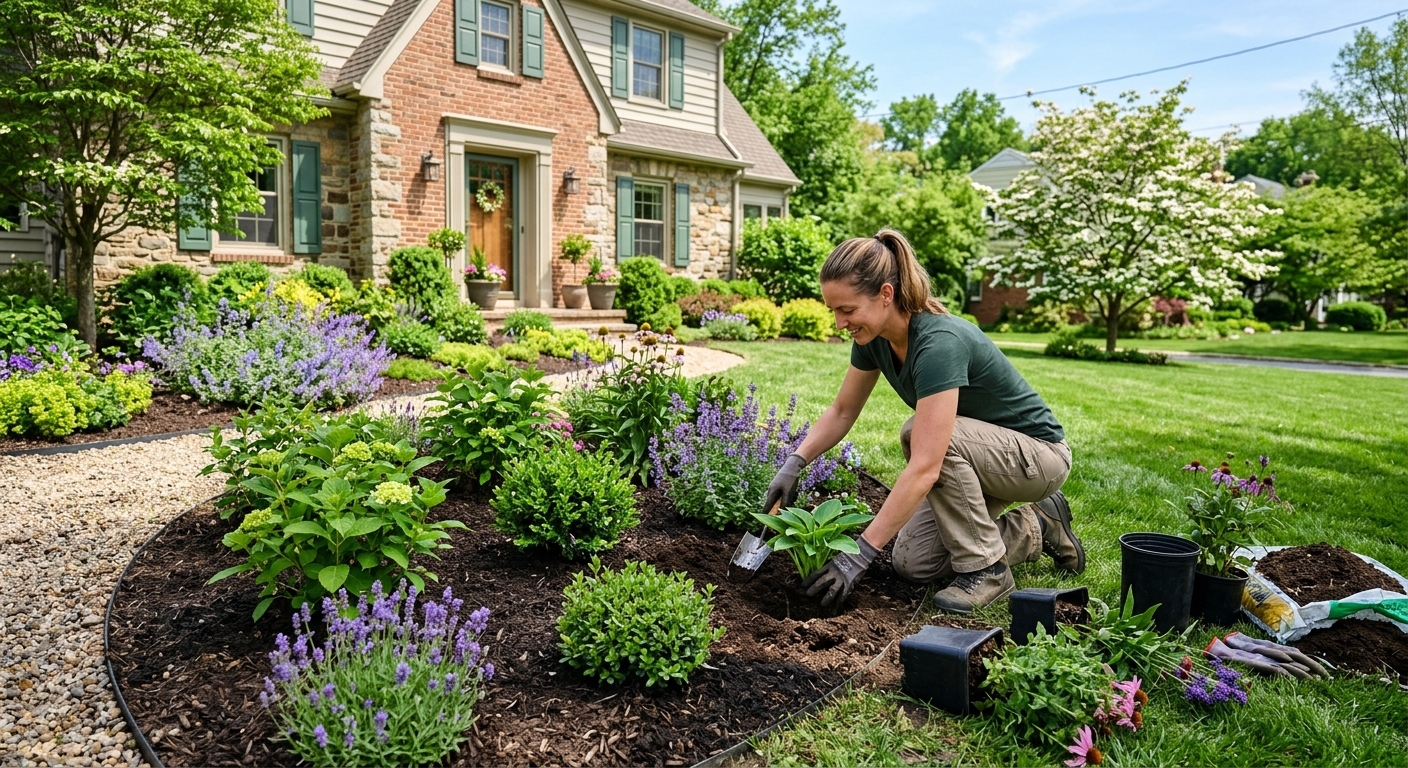
Landscaping options and costs in Rosedale-Moore Park
In Rosedale-Moore Park, homeowners often want their yard to look refined in summer while still surviving Toronto’s freeze–thaw winters. That balancing act is one reason landscaping budgets vary widely—even on similar lots. With a population of 20,923 (Statistics Canada, 2021 Census), the area’s steady demand means contractors stay busy during the May-to-October window, which can tighten availability and raise labour rates for late-season bookings. At the same time, many properties in established neighbourhoods have mature trees and older clay-heavy fill, so excavation, soil amendment, and drainage corrections are common scope items. The result: “one-size-fits-all” projects are rare, and quotes can move fast when site conditions change.
Toronto-area costs are shaped first by climate and soil. The GTA sits in plant hardiness zones 6a–7a with winter lows roughly near –23 to –18°C, plus repeated freeze–thaw cycles. That structural stress drives deeper granular bases for patios, steps, and retaining walls, and it makes grading/drainage work a bigger line item than homeowners expect. Conversely, when yards are already well-drained and access is easy, costs can land closer to the lower end of the regional bands.
Demand is especially strong around neighbourhood pockets where frontage gardens and walkways are front-and-centre—often near the Rosedale subway/valley approaches and along busy frontage streets—because homeowners typically prioritize curb appeal and reliable winter structure. From there, the most useful way to compare contractor proposals is to look at the common service ranges in the table below.
| Service |
Description |
Season |
Price Range |
| Full landscape design and installation |
Concept + grading plan + planting plan + softscape and hardscape build (excludes major regrading requiring engineered plans) |
Spring to early fall |
$8,000–$40,000 |
| Sod installation (supply, grade, lay, roll) |
Site prep, topsoil adjustment, sod supply and installation; includes basic edging and rolling |
Late spring to early fall |
$2,500–$8,000 |
| Lawn seeding (grade, seed, starter fertilizer) |
Light grading, soil amendment where needed, seeding, starter fertilizer; typically no sod removal beyond top surface |
Spring or early fall |
$1,800–$5,500 |
| Interlocking patio or walkway |
Excavation, compacted base, geotextile, paver installation, edge restraints, joint sand |
Spring to fall |
$6,000–$30,000 |
| Retaining wall (interlocking block) |
Block wall build with granular backfill, compacted base, and drainage provisions (as required by site) |
Spring to early fall |
$6,000–$30,000 |
| Tree and shrub planting |
Plant supply and installation, staking where needed, soil prep, mulch ring or bed edging |
Spring or fall (best survival) |
$800–$6,000 |
Prices are estimates only and vary by project scope, site access and material selection.
What affects the price of landscaping in Rosedale-Moore Park
In Toronto, it’s common to see quotes for the “same” landscaping scope differ by 30–50%. That gap usually isn’t the plants—it’s the site conditions, the labour plan, and how each contractor budgets for drainage and frost protection. In Ontario, winter frost and frequent freeze–thaw cycles force contractors to build structures with deeper, better-compacted bases. If one proposal includes proper subdrains, excavation to suitable material, and geotextile reinforcement while the other doesn’t, the pricing can swing quickly.
Plants and seasonal availability also matter. The GTA is in hardiness zones 6a–7a, so we select perennials and hardy woody plants that can handle winter lows near –23 to –18°C, but we still have to respect frost timing and the real working season. Prairie regions (Zone 2–4) face shorter growing seasons and harsher cold, so designs often shift toward ultra-hardy, drought-tolerant species and simpler palettes; wall base depth requirements also change because frost behaviour differs. Coastal BC (Zone 7–8) can support lush, broadleaf evergreen structure longer into the year, but heavy-rain drainage and soil saturation management can still be expensive. Dry BC interior areas may impose water restrictions, pushing irrigation to drip-first designs. Southern Ontario sits in between: a moderate season with irrigation needs during summer dry spells.
Two practical examples that move costs in Rosedale-Moore Park: (1) older neighbourhood clay and fill often require soil amendment and sometimes a drainage bed, which can add significant labour before you even start planting; and (2) if a patio area needs deeper excavation to reach stable base material, interlocking costs can drift upward toward the top end of the $6,000–$30,000 band for patios/walkways. For lawns, choosing sod can also be a big budget jump—often landing near the $2,500–$8,000 range—while seeding can reduce cost, but with slower establishment and higher risk on uneven grades.
| Price Factor |
Why It Matters |
Cost Impact |
| Yard size in sq ft — the primary cost driver for softscape |
More area means more excavation, soil, edging, seed/sod, mulch, and labour hours |
Typically drives the largest variance between quotes (often 15–40%) |
| Grading and drainage work — slope corrections add significant cost |
Better slope prevents pooling and foundation moisture; it also affects how deep you must excavate |
Can add 10–25% depending on how much regrading is needed |
| Drainage bed or French drain installation |
Helps manage spring melt, downspout discharge, and saturated zones in clay soils |
Often adds a noticeable line item (commonly 8–20%) |
| Plant material tier — native shrubs vs. ornamental vs. mature specimen trees |
Specimens cost more to source and require bigger planting holes, labour, and sometimes lifting |
Can swing 5–30% depending on plant sizes and quantities |
| Hardscape vs. softscape ratio — walls and patios cost more per sq ft than lawn |
Patios, walkways, and retaining walls require deeper bases, blocks/pavers, and compaction |
May shift total project cost by 20–50% on mixed-scope jobs |
| Irrigation system design and installation |
Design, pipe runs, and controller setup; in Ontario it’s often used to protect establishment during summer dry spells |
Often adds 5–20% depending on coverage and complexity |
| Soil amendment and topsoil required |
Clay and fill frequently need amendment for rooting depth and drainage performance |
Can add 5–25% when significant import is needed |
| Tree removal or stump grinding before new planting |
Impacts excavation planning, debris disposal, and can trigger additional protection measures |
Commonly adds 3–15% depending on access and stump size |
Permits & regulations in Ontario
In Ontario, most planting and softscape work doesn’t require a permit. Typical examples that usually do not need a permit include: lawn seeding, sod installation, mulch and shrub bed installation, tree and shrub planting, and most non-structural garden features. However, retaining walls can cross into permit territory depending on height and municipal rules, so it’s important to confirm locally before you dig.
Work that often DOES require a permit includes retaining walls above the common threshold of about 1.0 m (3.3 ft) in many Ontario municipalities, especially where the wall could be considered structural. Changes to lot grading can also trigger review when they alter drainage patterns toward neighbouring properties or affect storm sewer connections. Before any excavation for planting holes, subdrains, or wall footings, confirm utility locates (call before you dig) to avoid hitting buried services.
For Rosedale-Moore Park homeowners, a practical way to verify a contractor is: (1) check the contractor’s Ontario business licensing/registration status (where applicable) and contractor profile listings online; (2) request a clear Certificate of Insurance showing general liability; and (3) ask for WSIB coverage details (or the equivalent coverage status required for workers) and keep proof in writing. For liability, don’t accept vague statements—ask for an up-to-date certificate and confirm it covers landscaping/hardscape work, excavation, and off-site material transport. If permits are required for grading or retaining walls, a reputable contractor will explain who pulls them and what documents are needed.
Planning a landscape that thrives in Rosedale-Moore Park's climate
To plan a yard that thrives in Rosedale-Moore Park, design around Toronto’s hardiness range (zones 6a–7a), winter cold near –23 to –18°C, and the reality of freeze–thaw cycles. Start with plant selection: favour native, zone-appropriate shrubs and perennials that establish well in local soils and require less watering and winter protection. Use mulch correctly to buffer roots through temperature swings and to reduce drying during winter wind and early spring sun.
Next, match turf strategy to your timeline. Sod gives instant curb appeal and soil coverage right away, but it typically costs about 3–4× more per sq ft than seeding once you include prep and installation. Seeding is usually the better value if you can manage watering during establishment, but it takes longer to look “finished.” If you’re trying to spend wisely, a common approach is seeding most of the lawn and using sod only for high-visibility or high-traffic strips—though it depends on how your existing grade drains.
Drainage and grading are non-negotiable in Toronto. Pooling after spring melt can weaken foundations and shorten the lifespan of pavers and blockwork. For patios, retaining walls, and steps, base preparation should be built for the frost line effect: excavate to stable material, install the correct compacted base depth, and ensure proper geotextile reinforcement and drainage backfill. In mixed residential lots, these steps are often what separates a wall that looks great year one from one that shifts by year five.
For low-maintenance design, lean into groundcovers, properly spaced mulch beds, and durable perennials that return annually. Consider a rain-garden or bioswale in downspout-receiving areas to handle spring surges without relying entirely on irrigation. If you’re deciding between options, it can be justified: for example, moving from lawn seeding to sod across a large front yard might land in the $2,500–$8,000 range, but the added cost is worth it when you need rapid appearance for resale staging or when seeding would struggle due to uneven drainage.
| Element |
Climate Consideration |
Maintenance Level |
Price Band |
| Sod lawn installation |
Establishment needs consistent moisture during warm weeks; freeze–thaw can lift poorly prepped bases |
Low short-term, medium during establishment (watering and light rolling/edge checks) |
$2,500–$8,000 |
| Native perennial garden |
Hardy selection for zone 6a–7a improves winter survival and reduces replanting after severe cold snaps |
Low to medium (mulch refresh, spring cleanup, occasional weeding) |
$1,200–$6,000 |
| Mulched shrub border |
Mulch buffers roots through temperature swings; drought-tolerant options help during summer dry spells |
Low (spring shaping, weed control early season) |
$900–$4,500 |
| Interlocking stone patio |
Requires frost-protected base and drainage so pavers don’t heave through freeze–thaw cycles |
Low (periodic joint sand top-up and occasional weed removal) |
$6,000–$30,000 |
| Retaining wall (block) |
Clay soils need correct backfill and drainage behind the wall to reduce hydrostatic pressure |
Low (visual checks after spring melt; no “annual” work expected) |
$6,000–$30,000 |
| Drip irrigation system |
Helps establish plants without waste; consider timers and zoning to reduce summer drought stress |
Medium (seasonal winter blowout/maintenance depending on design) |
$1,800–$7,000 |
How to choose a landscaping contractor in Rosedale-Moore Park
Choosing a contractor in Rosedale-Moore Park starts with verifying coverage. In Ontario, ask for a current Certificate of Insurance (general liability) and confirm it’s valid for the project scope, including excavation, delivery, and any hardscape work. For workers, confirm WSIB coverage (or the coverage status that applies to the contractor’s workforce) and obtain proof in writing. If a contractor can’t provide these documents promptly, treat it as a major risk signal.
Next, get 2–3 itemised written quotes instead of a single lump sum. You want a labour + materials breakdown for each component (e.g., excavation, base/gravel, geotextile, pavers/blocks, soil amendment, plant material, disposal). A well-prepared quote will also show what’s excluded: for example, whether tree removals, permit fees, topsoil import depth, or disposal of excess excavated soil are included. Confirm whether permit pulling is part of the package when retaining walls trigger approvals.
Warranty matters too. Request: (1) a workmanship warranty length (often 1–2 years minimum on installation), (2) product/manufacturer warranties on items like pavers/blocks or seed/sod treatments, and (3) whether warranties transfer if you sell the home.
For payments, never pay more than 10–15% upfront. Use a holdback until completion and final cleanup. Ask for an explicit start date and a realistic completion estimate in writing, along with weather contingency language—Toronto projects can shift when heavy rain delays base prep or when freeze–thaw hits mid-schedule.
- Verify Ontario coverage documents (certificate of insurance) before any work starts.
- Confirm WSIB/WCB coverage for workers; keep copies of proof.
- Request itemised labour and material line items (no “allowance” gaps).
- Ask who handles permits if a retaining wall exceeds the common ~1.0 m threshold.
- Confirm disposal and haul-away of excess soil is included (or priced separately).
- Ensure grading and drainage are described with clear responsibilities (what gets fixed, to what standard).
- Check for compaction/aggregate specs (base depth, geotextile, edging restraints).
- Clarify plant warranty and replacement terms for dead/won’t-establish material.
- Get installation dates tied to your preferred season (and note frost-risk limits).
- Confirm irrigation scope if included: coverage zones, controller/timers, and winterization plan.
- Require a written schedule with start date, milestones, and completion estimate.
- Use progressive payments with a holdback until final inspection and cleanup.
Red flags I see with landscaping contractors in Rosedale-Moore Park: they refuse to provide proof of insurance/WSIB, they quote without site access details (no excavation plan), they omit drainage/grading scope while pricing walls/patios, they demand large upfront payments beyond 10–15%, and they won’t put warranty and exclusions in writing.
Frequently asked questions — landscaping in Rosedale-Moore Park
Do I need a permit for a retaining wall in Ontario?
In Ontario, many landscaping activities don’t require permits, but retaining walls often do depending on height and how the wall is classified in your municipality. A common threshold in practice is around 1.0 m (3.3 ft); walls above that level may require a building permit and sometimes engineered details. For Rosedale-Moore Park homeowners, the safest approach is to ask your contractor to confirm the wall height and the permit pathway before excavation. Also note that any significant lot grading change connected to the wall can trigger additional review. When you get quotes, ask explicitly whether permit pulling is included and whether the contractor will provide documentation for approval. If you’re comparing budgets, retaining-wall work typically falls in the $6,000–$30,000 band, but permitting and engineering can add cost if the project crosses the threshold.
How do I improve drainage in my yard?
Improving drainage usually starts with a site diagnosis: where water pools after rain, how downspouts discharge, and how your clay/fill behaves during spring melt. In Rosedale-Moore Park, water management matters because freeze–thaw can worsen heaving and shorten hardscape life if runoff is trapped. The most reliable options are regrading to direct water away from foundations, adding a drainage bed or French drain where water collects, and ensuring any new topsoil doesn’t create a “high spot” that holds water. If you’re doing a patio or blockwork project, include proper granular backfill and drainage provisions behind retaining elements—this is often the difference between a wall that stays straight and one that shifts. Get an itemised quote that references drainage work; it can be a meaningful cost driver, often pushing projects toward the upper end of general landscaping budgets.
What is xeriscaping and does it suit Rosedale-Moore Park?
Xeriscaping is a landscaping approach that reduces water use by using drought-tolerant plants, efficient placement, mulch, and—when needed—targeted irrigation such as drip. In Rosedale-Moore Park and the broader Toronto area, we don’t face the same harsh long dry stretches as some Prairie regions, but you still get summer dry spells, and newly planted beds require consistent moisture to establish. That’s why xeriscaping strategies can absolutely suit Ontario yards when done correctly: combine zone-appropriate perennials and shrubs (hardiness zone 6a–7a) with 2–3 inches of mulch and groundcovers to limit evaporation. If your goal is low upkeep and reduced watering bills, a drip system paired with well-chosen plants is often the best compromise. If you’re comparing turf, note that sod typically lands around $2,500–$8,000, while seeded lawns plus xeric planting areas can be more cost-effective long term.
How do I plan a low-maintenance yard?
A low-maintenance yard in Rosedale-Moore Park is usually built from repeatable, durable elements: a strong drainage/grading base, mulch beds instead of frequent lawn replacement, and plants that don’t demand constant pruning. Start with groundcovers and native or zone-appropriate perennials so you reduce weeding and replanting. Use a consistent mulching strategy (and weed barrier only where appropriate) and avoid mixing plants that have wildly different water needs. For hardscape, proper base preparation is key: interlocking patios and walkways built with frost-protected bases and proper joint sand require far less annual work than poorly prepped installations. If your budget is tight, prioritize what you touch most: a simple interlocking path plus a mulched shrub border often feels “finished” without the higher cost of full hardscape expansions. For many homeowners, that’s why full landscape design and installation commonly ranges from $8,000–$40,000—scope choice matters.
How deep should a retaining-wall base be for local frost?
For retaining walls in Southern Ontario, depth depends on wall height, soil conditions, drainage behind the wall, and the specific block system details. That said, freeze–thaw cycles mean you can’t treat the base as “shallow landscaping.” A contractor should excavate to stable material, build a properly compacted granular base, and incorporate geotextile and drainage layers where required so water doesn’t freeze behind the wall. In practice, base preparation usually extends well below the finished grade and must account for frost effects rather than matching the paver depth used for patios. Because wall construction varies, the best way to confirm is to require an itemised quote that states the base build-up (excavation depth to base material, compacted aggregate, and drainage/backfill plan). If the wall triggers a permit threshold, engineering details may specify the foundation parameters.
How much does professional landscape design cost?
Professional landscape design costs vary based on how detailed the plan needs to be (concept only vs. full site plan, grading/drainage direction, planting layout, and construction-ready drawings). In the Toronto area, design and installation budgets often bundle together because contractors provide both the plan and the build. That’s why full landscape design and installation commonly falls in the $8,000–$40,000 range depending on yard size, hardscape scope, and drainage complexity. If you’re only doing a design (and hiring a different builder), expect the design portion to be a smaller line item but still project-dependent. For Rosedale-Moore Park, ensure the design includes realistic frost-aware recommendations for patios and retaining walls, and that it addresses Toronto’s drainage needs—those details prevent expensive rework during construction.