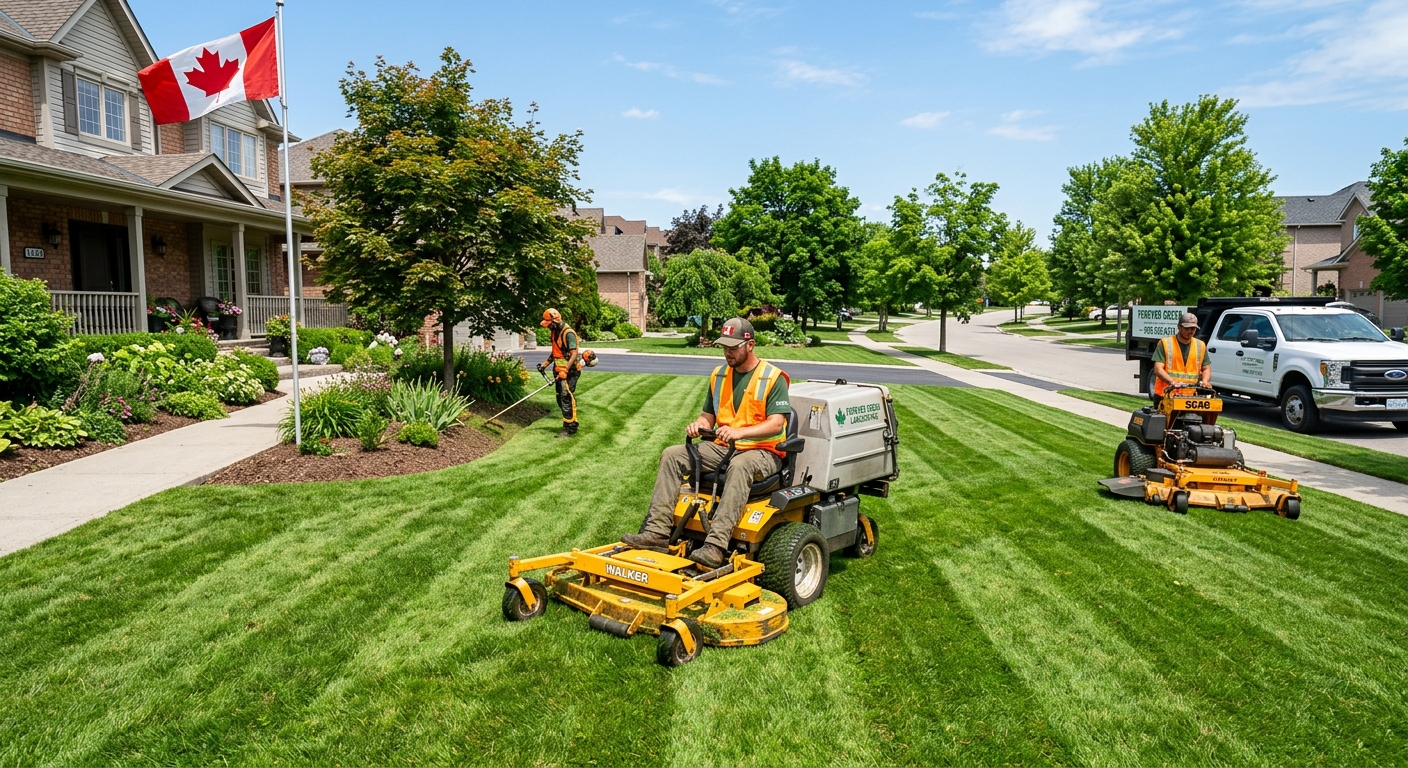
Landscaping options and costs in The Beaches
The Beaches, Ontario is a neighbourhood where homeowners often want a finished front and backyard that looks good year-round, not just in mid-summer. With a population of 21,567 (Statistics Canada, 2021 Census), the local housing stock is busy and competitive—especially around quieter pockets like Queen Street East near Victoria Park, where many properties have usable yard space and a strong incentive to invest. In practical terms, that means landscaping demand stays high during the May-to-October working window, and crews can book out faster for outdoor installs.
In The Beaches, costs are shaped by Toronto-area climate and soil. We’re typically working in hardiness zones around 6a–7a, so plant selection balances winter lows with hot, humid summers and freeze–thaw cycles. Those freeze–thaw cycles are why patios, steps, and retaining walls often require deeper granular bases and drainage layers—especially when clay or fill soils are present. Soil excavation, soil amendment, and subdrains can raise budgets even for “similar” projects.
Because the project scope can shift quickly—from “make it nicer” to “solve drainage and regrade”—quotes for the same yard can spread widely. Below is a realistic cost snapshot for common options you’ll see in The Beaches, before we tailor the plan to your site access, yard size, and materials.
| Service |
Description |
Season |
Price Range |
| Full landscape design and installation |
On-site design, grading plan, plant layout, soil prep, planting and/or hardscape buildout, cleanup |
Spring–fall (typically May–October) |
$8,000–$40,000 |
| Sod installation (supply, grade, lay, roll) |
Existing turf removal (if needed), grading and topsoil, soil starter, sod delivery/lay, rolling and light watering plan |
Late spring and early fall |
$2,500–$8,000 |
| Lawn seeding (grade, seed, starter fertilizer) |
Grade correction, seed mix, starter fertilizer, light raking, temporary protection guidance |
Spring or fall |
$1,800–$6,000 |
| Interlocking patio or walkway |
Excavation, granular base, geotextile, edge restraints, interlocking stone, jointing sand |
Spring–fall |
$6,000–$30,000 |
| Retaining wall (interlocking block) |
Wall layout, excavation and base prep, block system build, drainage weeping tile/backfill (as required) |
Spring–fall |
$6,000–$25,000 |
| Tree and shrub planting |
Site marking, digging, amendments, staking (where needed), watering plan, mulch rings, final walk-through |
Spring–early summer and fall |
$800–$6,000 |
Prices are estimates only and vary by project scope, site access and material selection.
What affects the price of landscaping in The Beaches
If you’re comparing quotes in The Beaches, it’s common to see the “same” project come in 30–50% apart—because the hidden work (grading, drainage, soil amendments, base depth, and haul-off) is where costs swing. In Toronto-area conditions, contractors price the yard as a system: what water does in heavy rains, where it goes during spring melt, and how freeze–thaw affects the base under hardscape. That’s why a plan that looks similar on paper can require very different construction.
Hardiness zone and frost timing determine both plant survivability and the working season. In Southern Ontario (Zone 5–6 area), we typically plan installs for the May–October frost-free period, but freeze–thaw cycles in winter still drive deeper patio and retaining-wall base preparation. In Prairie regions (Zone 2–4), shorter seasons and drought push designs toward ultra-hardy, drought-tolerant species and simpler palettes; working days and watering setups can be different, often making full installs more labour-efficient but more focused on survivability. Coastal BC (Zone 7–8) supports lush plant palettes with a longer growing season, but you still need strong drainage in heavy-rainfall areas. In dry BC interior communities and parts of Alberta, water restrictions shape irrigation and plant selection around efficient drip systems.
In The Beaches specifically, two common cost examples show up fast. First, if we have to correct slope so runoff doesn’t pool near the foundation, the grading and drainage scope can move a patio or wall project toward the upper end of the $6,000–$30,000 hardscape band. Second, clay and fill soils often require soil amendment and sometimes a subdrain; that can turn a “planting-only” job into a larger $8,000–$40,000 full design/installation budget. With older lots and mature trees, excavation and stump work can add material and disposal costs too.
| Price Factor |
Why It Matters |
Cost Impact |
| Yard size in sq ft |
Softscape quantities (topsoil, sod/seed, mulch, labour hours) scale directly with area |
Low to very high—often the biggest driver for lawns and planting beds |
| Grading and drainage work |
Toronto-area clay/fill and freeze–thaw require correct slope so water drains away reliably |
Can add moderate to major cost, especially for foundation-adjacent areas |
| Drainage bed or French drain installation |
Helps manage persistent damp spots and prevents water from undermining bases |
Moderate to major increase depending on length/depth and tie-in requirements |
| Plant material tier |
Native shrubs vs. ornamental options vs. mature specimens change both material cost and installation complexity |
Moderate to very high, especially with larger container sizes or balled-and-burlapped trees |
| Hardscape vs. softscape ratio |
Patios, walks, and walls require excavation, base materials, and strict compaction control |
Hardscape typically costs more per sq ft than lawn or beds, shifting totals quickly |
| Irrigation system design and installation |
Sprinkler zoning and coverage matter in humid summers and dry spells; retrofits can be disruptive |
Moderate; increases most when regrading or adding new supply lines |
| Soil amendment and topsoil required |
Improves rooting and reduces lawn/bed failure; clay often needs amendment and/or import |
Moderate; becomes major when significant excavation and haul-off are needed |
| Tree removal or stump grinding before new planting |
Creates access, prevents regrowth issues, and clears room for regrade and foundations |
Moderate increase; can escalate if roots affect drainage or hardscape layouts |
Permits & regulations in Ontario
In Ontario, most planting, sodding, and general softscape work typically does not require a permit. However, certain retaining-wall projects and grading changes can trigger approval requirements—especially when the wall height crosses the threshold used by many municipalities (commonly around 1.0 m or 3.3 ft). If you’re planning an interlocking block wall, it’s smart to confirm whether your specific height, location, and design call for a building permit and sometimes engineered details.
Also keep in mind that changing lot grading can affect drainage patterns. If your plan would redirect surface water toward a neighbour’s property or toward storm connections in a way the municipality may not approve, that can require review. Before digging any planting holes, trenching for French drains, or installing wall footings, call for utility locates so you don’t disturb buried services.
For your due diligence in The Beaches, verify contractor credentials before you sign anything. First, confirm the contractor’s Ontario licence and check their liability insurance certificate (you should see coverage active for the project timeframe and a sufficient limit for landscaping/hardscape work). Next, confirm their WSIB/WCB coverage status—ask for a clearance letter or proof of account/coverage. If a contractor can’t provide these, it’s a sign to slow down.
Finally, ask whether the contractor will handle permit paperwork if it’s required for your wall or grading change—some homeowners get surprised when “design only” quotes later require separate approvals.
Planning a landscape that thrives in The Beaches's climate
To plan a yard that thrives in The Beaches, think in terms of working with our hardiness zone, precipitation swings, and freeze–thaw cycle—not against them. Start with plant selection. Choose native and zone-appropriate species that handle winter lows without heavy winter labour, and that don’t demand constant watering in summer. Pair that with smart soil prep: healthier soil means plants root deeper, which is critical when humidity spikes and then temperatures drop quickly.
For lawn establishment, compare sod versus seed. Sod gives instant curb appeal, but it costs roughly 3–4 times more per sq ft than seeding once you include preparation and delivery logistics. If you need the yard to look “done” for an event, sod can be worth it; if you can wait a bit for density, seeding is often the better value.
Drainage and grading are non-negotiable in Toronto. Small changes—like correcting slope away from the foundation—can prevent pooling and reduce foundation moisture risk. And for hardscape (patios and retaining walls), base prep must be built for the local frost line conditions: proper excavation depth, granular base layers, compaction, and drainage layers keep stone and block from shifting over repeated freeze–thaw seasons.
For low maintenance, use groundcovers, mulched shrub borders, and perennial groupings that don’t need replanting every couple of years. A rain-garden or bioswale approach can also help manage runoff while staying consistent with Toronto’s wetter spring periods, without relying entirely on lawn watering.
Example: If you’re turning a 500 sq ft lawn area into sod, you may fall into the $2,500–$8,000 sod band depending on grading needs. If you seed instead, you might keep that budget significantly lower while still ending up with a good lawn—provided you seed at the right time and follow the watering/maintenance plan.
| Element |
Climate Consideration |
Maintenance Level |
Price Band |
| Sod lawn installation |
Needs consistent moisture during establishment across humid summers; timing matters to reduce winter-kill risk |
Low after establishment; higher during first 2–6 weeks |
$2,500–$8,000 |
| Native perennial garden |
Zone-appropriate plants handle winter lows better; deeper rooting improves drought tolerance in summer dry spells |
Medium (mulch refresh and seasonal pruning) |
$1,800–$7,500 |
| Mulched shrub border |
Mulch moderates soil temperature through freeze–thaw and reduces evaporation during humid heat |
Low to medium |
$1,200–$6,000 |
| Interlocking stone patio |
Requires frost-resilient base layers and drainage to prevent settling and heaving |
Low (seasonal cleaning and occasional joint topping) |
$6,000–$30,000 |
| Retaining wall (block) |
Backfill/drainage systems help manage water load during heavy rains and spring melt |
Low after construction (inspection and drainage checks) |
$6,000–$25,000 |
| Drip irrigation system |
Efficient watering for beds during dry stretches while reducing overwatering of lawn areas |
Low once set up; seasonal adjustments may be needed |
$2,000–$6,500 |
How to choose a landscaping contractor in The Beaches
Choosing a contractor in The Beaches is mostly about verification and clarity. First, confirm licensing and insurance. Ask for a copy of the contractor’s liability insurance certificate (make sure it’s active and includes coverage for the type of work—especially hardscape excavation and retaining-wall installations). Next, confirm WSIB/WCB coverage. A credible contractor can provide a clearance letter or proof of coverage status.
When you request quotes, don’t accept “lump sum only.” Get 2–3 itemised written quotes that separate labour and materials. You want line items for excavation, base materials, soil/topsoil, disposal, planting stock, and any drainage components—so you can tell whether you’re comparing a basic build versus a frost-resilient base and proper drainage.
Read the scope carefully for exclusions: is demolition included? Is haul-away included or extra? Will the contractor pull any permits if your retaining wall height requires one? What’s included in site access (gates, walkway distances) and protection (property covers, driveway protection)?
Warranty matters too. Ask for a workmanship warranty period (often 1 year for installation; sometimes longer depending on the contractor) and clarify product/manufacturer warranties for trees, shrubs, or sod—plus whether the warranty is transferable to you as the homeowner.
For payment, avoid large deposits. A safe approach is no more than 10–15% upfront, then hold back until key milestones are complete (base inspection, rough grading, final planting). And make sure your timeline includes a written start date and estimated completion window.
- Ask for site visit confirmation: no quote without measuring setbacks, access, and existing drainage.
- Require itemised labour/material breakdown, not just totals.
- Confirm base build details: geotextile, granular layers, compaction steps for patios/walkways.
- Ask how they handle clay/fill: soil amendment, subdrains, and disposal/haul-off.
- Check whether drainage ties into existing weeping tiles or stays self-contained (and how they verify flow).
- Verify contractor insurance and WSIB/WCB proof before work begins.
- Confirm plant guarantees (replacement policy and acceptable failure window).
- Get interlocking/wall details: restraints, drainage backfill, and weeping tile where required.
- Clarify irrigation scope: supply lines, zoning, controller setup, and winterisation notes.
- Confirm cleanup/disposal: sod/seed waste, overburden, and materials stacking responsibilities.
- Ask about protection of neighbours’ property and shared edges during excavation.
- Ensure payment schedule matches milestones; keep holdback for final walk-through acceptance.
Red flags in The Beaches include: contractors who can’t provide proof of liability insurance or WSIB/WCB, quotes that omit drainage/base build specifics, deposits significantly above 10–15%, “permit not needed” statements without asking about your retaining wall height or grading changes, and no written warranty terms or completion dates.
Frequently asked questions — landscaping in The Beaches
How do I compare landscaping quotes?
Start by comparing scope and line items, not just the total. In The Beaches, the biggest quote differences usually come from grading and drainage (topsoil import vs. just surface patching), excavation depth and compaction for patios, and whether a retaining wall includes proper backfill and drainage layers. Ask each contractor to list labour and materials separately—base material type and thickness, disposal/haul-off, geotextile and restraints for interlocking, and the size/grade of sod or plants. Also check timing: crews often schedule spring/fall lawn work tightly, and rushed installs can lead to poor establishment. If you’re seeing hardscape numbers near $6,000–$30,000, verify what’s included in that range (especially drainage and base preparation). Finally, confirm insurance/WSIB coverage and ask what warranty covers (workmanship vs. product replacement).
How long does a landscaping project take in The Beaches?
Most projects in The Beaches run within the May–October working window because freeze–thaw affects how reliably we can compact bases and establish lawns and planting. A small planting refresh (shrubs/perennials plus mulch) may take 1–3 days on site, while a typical interlocking patio can take about 1–2 weeks end-to-end including excavation, base build, stone laying, and cure/cleanup. Retaining wall projects can be longer because excavation, base preparation, block construction, and drainage backfill need proper sequencing. Lawn work is weather-sensitive: sod installation is usually a “one to two days on-site” operation, but establishment care continues for weeks. If your yard needs drainage correction or regrading before planting, add time because soil delivery and compaction checks take scheduling. For larger design-and-install jobs in the $8,000–$40,000 band, plan for multiple visits and a couple of weeks to finalize details depending on plant availability.
What is the best grass type for a The Beaches lawn?
For lawns in The Beaches, most homeowners do best with cool-season grass types that tolerate Toronto winters and summer humidity. The “best” mix depends on sunlight and your soil drainage, but typical approaches use a blend designed for northern climates and traffic tolerance. If your yard is partly shaded near trees, choose a seed or sod selection formulated for shade performance rather than a full-sun product. If drainage is poor, fix grading and consider soil amendment first—grass often struggles even with the right type if water pools. In practice, we often recommend either sod if you need rapid results or a high-quality seed mix if you can commit to consistent watering during establishment. If you want, share whether your yard is full sun or shade and whether you see damp spots after heavy rain—those details influence the best grass and seeding rate for your site in Ontario.
When should I aerate and overseed my lawn in The Beaches?
In Ontario’s Toronto-area climate, the most reliable aeration and overseeding windows are early fall and, in some cases, late spring. Early fall is popular because soil temps remain warm enough for germination while heat stress eases, which helps seedlings root before winter. Late spring can work, but it’s more sensitive to hot weather swings and dryness. The key is to aerate when the grass is actively growing and when you can follow through on watering—especially in humid summers that still include dry spells. If your lawn gets heavy foot traffic or compaction, aeration improves oxygen and water movement into the root zone. As a guideline, overseed after aeration with a seed mix appropriate for your sun/shade conditions, then apply light starter fertilizer and keep the surface evenly moist until germination. A soil test can also help, especially where clay causes uneven drainage.
What trees grow best in The Beaches's climate zone?
In The Beaches (Toronto-area zone conditions around 6a–7a), you want hardy trees that tolerate winter lows and summer humidity, plus freeze–thaw conditions that can stress shallow roots. Good candidate types commonly include serviceberry, ornamental cherries, and many varieties of maples and elms that are selected for local hardiness and resilience. For a lower-maintenance approach, choose trees that match your site—full sun versus shade, room for mature spread, and soil drainage. If you’re planting near a walkway or foundation, we’ll also factor root behavior and mature canopy size to avoid future conflicts. If you already have mature trees and you’re planning planting updates, we’ll coordinate spacing so understory plants thrive rather than compete. If you’d like specifics, tell us your yard’s sun exposure and whether you deal with damp soil after spring melt—those conditions strongly influence tree success in Ontario.
How much does sodding a yard cost in The Beaches?
Sodding costs in The Beaches typically fall within the $2,500–$8,000 range, depending on yard size, whether grading/topsoil correction is needed, and how difficult access is for sod delivery. Sod prices jump when the job includes removal of existing turf plus more excavation and soil import to achieve a consistent grade—especially on clay or fill soils that don’t drain evenly. Timing also matters: late spring and early fall usually provide better establishment conditions, reducing the risk of patchy turf going into winter. If your goal is immediate curb appeal and you can’t wait through the germination phase of seeding, sod is often justified. If you’re budget-sensitive and your lawn isn’t badly compacted or uneven, seeding can be a more economical alternative. A contractor should measure your square footage and explain grading steps clearly so you can compare apples to apples in Ontario.