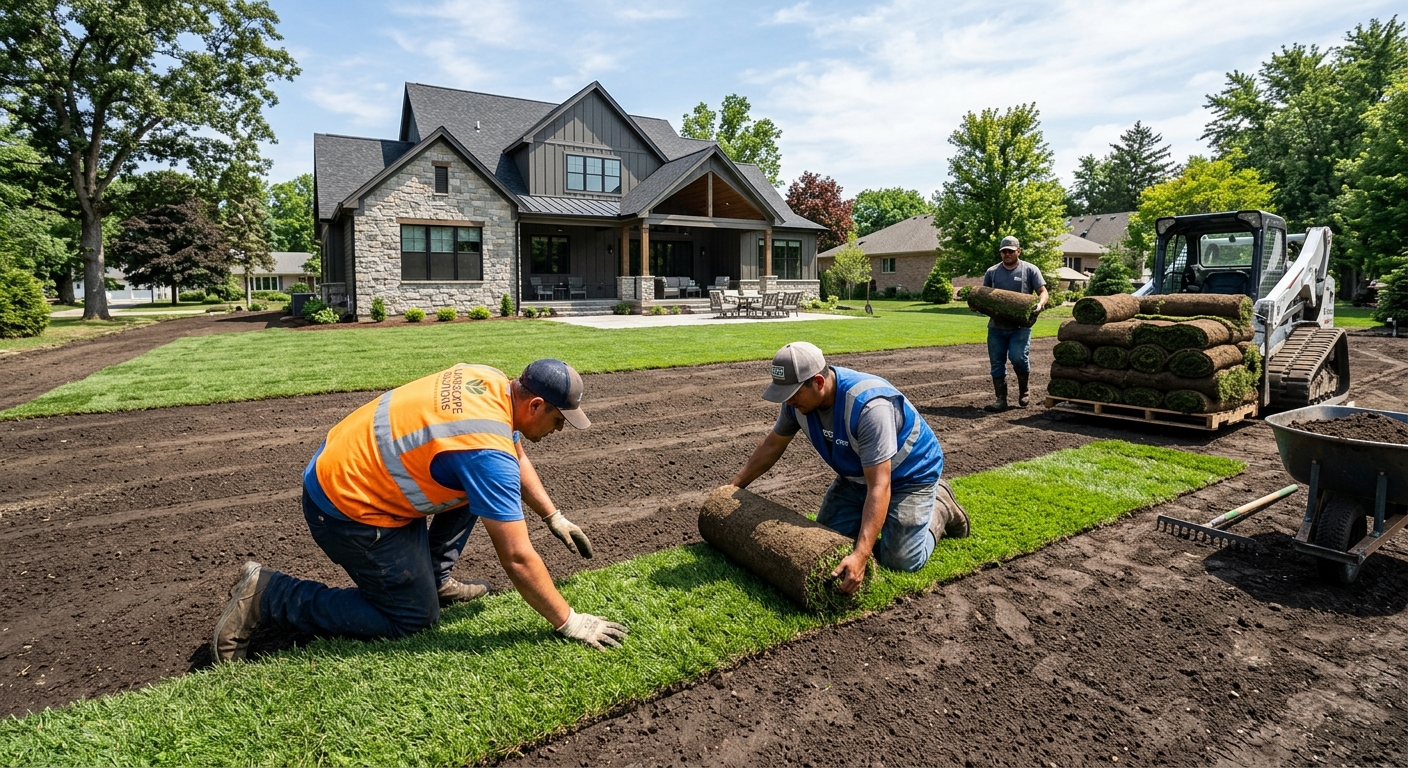
Landscaping options and costs in Ambleside
In Ambleside, most homeowners start with a clear goal: make the yard look intentional, but also handle our long, cool seasons without turning the lawn and beds into a weekly project. With a population of 11,998 residents (Statistics Canada, 2021 Census), the area attracts steady demand for seasonal landscaping labour, plant supply, and hardscape crews—especially around busy streets and walkable access points where site logistics matter. Many properties here also support meaningful softscape upgrades; attached homes typically have smaller yards, while detached lots generally have more room to stage topsoil, drainage improvements, and planting zones.
In the Lower Mainland–Southwest, we sit mostly in plant hardiness zones 7–8, so you can grow broadleaf evergreens, long-blooming perennials, and layered planting designs with a lower winter-damage risk than colder regions. That said, costs still reflect the wet winters and freeze–thaw cycles that can occur in coastal BC: patios, walkways, and retaining wall bases must be built with proper compaction, drainage, and adequate depth to manage movement on sloped properties common in parts of Ambleside.
Trade activity is particularly strong in and around Marine Drive and the Ambleside waterfront blocks, where curb appeal is high and homes often get refreshed as owners update entrances and rear patios. The result is a wide range of project budgets—from small planting installs to full design-and-build packages—shown in the comparison table below.
| Service |
Description |
Season |
Price Range |
| Full landscape design and installation |
On-site design consult, planting plan, drainage/grading coordination, supply and installation of hardscape/softscape as scoped |
Year-round (best results in spring & fall) |
$5,000–$50,000 |
| Sod installation (supply, grade, lay, roll) |
Soil prep, fine grading, topsoil amendments, sod delivery and installation, rolling, starter watering plan |
Late spring to early fall (avoid the wettest weeks) |
$2,500–$8,000 |
| Lawn seeding (grade, seed, starter fertilizer) |
Minor grading, seed mix, starter fertilizer, light top-dressing as needed, first-season care guidance |
Early spring to early summer |
$2,000–$5,500 |
| Interlocking patio or walkway |
Excavation, base course, compaction, geotextile, edging, interlocking stones, jointing sand, cleanup |
Spring to late fall |
$10,000–$55,000 |
| Retaining wall (interlocking block) |
Site assessment, excavation and drainage behind wall, block installation, reinforcement as required, sealing (if chosen) |
Spring to late fall |
$12,000–$80,000 |
| Tree and shrub planting |
Plant supply, soil preparation, staking if needed, mulch ring/grading around root zones, first watering plan |
Cool season planting (spring & fall) |
$1,000–$15,000 |
Prices are estimates only and vary by project scope, site access and material selection.
What affects the price of landscaping in Ambleside
In the Lower Mainland–Southwest, it’s common to see quotes for the “same” landscaping scope vary by 30–50% across British Columbia. The difference usually isn’t the turf and mulch—it’s the unseen work: drainage fixes, soil preparation, labour productivity on a tight lot, and the quality of the base under hardscape. A full design-and-install project can move from the lower end of the $5,000–$50,000 band to the upper end when the plan includes grading, drainage work, and a more layered planting approach that’s resilient through wet winters and dry spells.
Climate and frost timing shape both what grows and how crews schedule. In Zone 7–8, you can keep planting options broader (and avoid some winter-protection labour required in harsher zones), but coastal BC still demands excellent drainage because heavy-rain periods can saturate soil for days. In contrast, Prairie regions (Zone 2–4) need drought-tolerant, wind-hardy species and deeper frost considerations for structure bases. Even in our coastal setting, retaining walls and patios must be built for freeze–thaw cycles, which is why wall base preparation costs can rise quickly. When you compare a basic seeding plan to sod, the price jumps—often several thousand dollars—because sod delivery and installation are labour- and logistics-heavy.
Two common Ambleside examples: (1) A sloped backyard that needs slope correction and a properly compacted base for paving tends to add significant excavation and drainage time. (2) A mixed perennial and shrub bed that’s meant to look full in year one often uses larger container sizes or mature specimens, which fits the $1,000–$15,000 planting band—but will cost more than a “starter” plant list. For many older homes in the area, existing drainage may have settled over decades, and fixing that can shift a project by thousands of dollars, especially when foundation runoff needs to be redirected away from the house.
| Price Factor |
Why It Matters |
Cost Impact |
| Yard size in sq ft — the primary cost driver for softscape |
More square footage increases materials, labour hours, and disposal/cleanup |
$1,500–$20,000 |
| Grading and drainage work — slope corrections add significant cost |
Proper slopes prevent pooling and foundation moisture; requires excavation and re-compaction |
$2,500–$18,000 |
| Drainage bed or French drain installation |
Improves infiltration and reroutes water; needs correct depth and aggregate |
$1,800–$12,000 |
| Plant material tier — native shrubs vs. ornamental vs. mature specimen trees |
Container size and plant maturity strongly affect cost and installation time |
$900–$15,000 |
| Hardscape vs. softscape ratio — walls and patios cost more per sq ft than lawn |
Stone bases, edging, and precision jointing raise unit cost |
$3,000–$50,000 |
| Irrigation system design and installation |
Drip lines, valves, and smart controllers add materials and labour for proper layout |
$1,500–$9,500 |
| Soil amendment and topsoil required |
Poor existing soils may need compost, topsoil lifts, and soil conditioning to support plants |
$800–$6,500 |
| Tree removal or stump grinding before new planting |
Roots can complicate drainage and make excavation slower |
$600–$7,500 |
Permits & regulations in British Columbia
In British Columbia, most everyday softscape work—planting new beds, sowing grass, and sodding turf—typically does not require a permit. Homeowners commonly can proceed with planting and lawn upgrades through the contractor’s scheduled install. However, retaining walls are the big exception: in most municipalities, retaining walls above a height threshold (commonly around 1.0 m (3.3 ft)) require a building permit, and sometimes engineering drawings depending on the design and site conditions (like slope and surcharge loads).
Also watch for grading changes. If your project changes lot grading in a way that affects how water drains toward neighbouring properties or storm systems, approval requirements can apply—especially where drainage patterns may change after excavation. Before any digging for planting holes or wall footings, have the contractor do utility locates to confirm where buried services run.
Here’s a simple way to verify your contractor in Ambleside: ask for (1) their British Columbia licence documentation/registration info through the appropriate provincial business/licensing listings, (2) a current certificate of insurance (liability coverage matching the work), and (3) confirmation of WSIB/WCB coverage for workers—request a clearance letter or proof of coverage rather than relying on verbal statements. Then confirm who is responsible if utilities are damaged during excavation.
Planning a landscape that thrives in Ambleside's climate
To get a yard that looks good in Ambleside without constant rework, plan around our Zone 7–8 conditions, wet winter patterns, and the timing of frost. First, choose plants that match the climate—using native and zone-appropriate species where possible. They establish faster, handle our cool-season growth, and typically need less winter protection than borderline plants. Next, decide between sod and seed: sod is faster and delivers instant curb appeal, while seeding is a lower-cost path to a lawn that catches up over a season or two.
Drainage and grading are the difference between “pretty for photos” and a lawn that stays healthy through rainy stretches. In the Lower Mainland–Southwest, pooling can lead to bare spots, fungus, and foundation moisture. That’s why I strongly recommend starting with grading corrections and proper base prep before you lay interlocking stone. Hardscape like patios and retaining walls also needs base preparation to manage freeze–thaw movement; even if our frost-free window is long, base performance still matters.
Low-maintenance design strategies make sense here: groundcovers and mulched shrub borders reduce weeding, and well-chosen perennials add colour without the constant replants that come from overcrowded, mismatched plants. For water efficiency, you can blend in rain-garden pockets or xeriscape-style plant groupings—especially around downspouts and low points where runoff collects.
Dollar example: if you’re deciding between sod and seeding for a mid-sized lawn area, seeding might land closer to the $2,000–$5,500 band, while sod typically sits in the $2,500–$8,000 band. The difference is justified if you need immediate visual impact for resale or a key outdoor season; otherwise, seeding plus smart soil prep often gives better value.
| Element |
Climate Consideration |
Maintenance Level |
Price Band |
| Sod lawn installation |
Establishes quickly before coastal weather swings; requires careful watering plan through the first weeks |
Low–moderate (monitoring early establishment) |
$2,500–$8,000 |
| Native perennial garden |
Better match to Zone 7–8 conditions; typically more resilient in wet seasons once established |
Moderate (weeding year one, then light upkeep) |
$2,500–$12,000 |
| Mulched shrub border |
Mulch buffers soil moisture during dry spells and moderates winter temperature swings |
Low (annual top-up, seasonal pruning) |
$1,500–$10,500 |
| Interlocking stone patio |
Needs proper base drainage to handle rain and freeze–thaw cycles |
Low (occasional joint sand refresh) |
$10,000–$55,000 |
| Retaining wall (block) |
Drainage behind the wall is essential to prevent pressure and movement during wet winters |
Low–moderate (inspection after heavy seasons) |
$12,000–$80,000 |
| Drip irrigation system |
Drip supports efficient watering if restrictions occur; smart controllers help manage cycles |
Low (set-and-forget adjustments) |
$1,500–$9,500 |
How to choose a landscaping contractor in Ambleside
Choosing the right contractor in Ambleside starts with verification. In British Columbia, request proof of the contractor’s appropriate licensing/registration for their trade activities, then review a current certificate of insurance showing liability coverage for the work. For worker coverage, confirm their WSIB/WCB status with documentation or a clearance letter—don’t accept “we’re covered” without paperwork. If they do excavation or structural work for a patio base or retaining wall, their coverage should clearly align with the scope.
Next, get 2–3 itemised written quotes with labour and materials separated (for example: excavation and base course labour, stone supply, geotextile, drainage rock, and disposal). Read the scope carefully: what’s excluded (tree removal, saw cutting, ledge excavation, topsoil quantity, or disposal)? Is permit pulling included if a retaining wall threshold requires it? A detailed quote helps prevent mid-project extras that can move your budget from a $10,000–$80,000 hardscape range to a more expensive outcome.
Look for warranty clarity: ask for the workmanship warranty length, the manufacturer warranty for products (like interlocking stone or irrigation components), and whether warranties are transferable if you sell the home. Payment should be staged—never more than 10–15% upfront. Hold back a portion until the job is complete and cleaned. Finally, require a written timeline with a start date and an estimated completion window.
- Ask for their BC proof of registration/licence tied to the exact scope (softscape, excavation, hardscape/retaining).
- Confirm current liability insurance via certificate (check expiry dates and named insured).
- Verify WSIB/WCB clearance letter or coverage proof for active workers.
- Require itemised quoting: labour hours, material quantities, and disposal/haul-off lines.
- Ask who supplies and how much topsoil/compost is included (by cubic yard if possible).
- Confirm drainage details in writing (slopes, French drain depth, base course thickness).
- Get a detailed materials list: sod type/seed mix, stone thickness, edging, and underlayment.
- Clarify permits: is retaining wall permitting included if required for height and design?
- Warranty in writing for workmanship (and product warranty specifics).
- Payment schedule capped at 10–15% deposit; holdback until final walkthrough.
- Schedule coordination: verify start dates, weather contingency, and wet-season protections.
- Ask about site protection: tarps/boards, driveway protection, and cleanup standards.
Red flags I see too often around Ambleside: (1) a quote that’s only a lump sum with no drainage or base-course details, (2) “we don’t need utility locates” or no evidence they’ll confirm buried services, (3) refusal to provide insurance/WSIB/WCB documentation, (4) pushing large upfront payments beyond 10–15%, and (5) no written warranty terms for workmanship or unclear warranty transferability.
Frequently asked questions — landscaping in Ambleside
How long does a landscaping project take in Ambleside?
Timelines in Ambleside depend on weather windows and whether your job includes drainage, hardscape base work, and planting. Because Lower Mainland–Southwest winters are generally mild, planting and softscape can often be done much of the year, with the wettest weeks as the main slowdown. A simple planting refresh or small shrub border can be completed in 1–2 days. Sod installation commonly takes 1–3 days for typical backyards, but establishment still requires care for several weeks afterward. Interlocking patios and retaining wall projects take longer—often 1–3 weeks depending on excavation, base compaction, drainage behind walls, and curing time. If your scope moves from a smaller planting install toward a full $5,000–$50,000 design-and-install, expect more scheduling coordination and material lead time, even in coastal BC.
What is the best grass type for a Ambleside lawn?
For Ambleside and most of the Lower Mainland–Southwest, homeowners usually do best with cool-season turfgrasses that handle coastal humidity and the cool-to-mild growing pattern. In practice, many lawn installs use sod or seeding mixes designed for BC’s climate rather than heat-loving varieties. If you’re seeding, your contractor should suggest a blend that matches sun exposure (full sun vs. partial shade near fences and trees) and includes starter fertilizer. If you go with sod, quality matters as much as species: strong root establishment reduces patching and washouts during rainy spells. Budget-wise, lawn work in Ambleside can land around $2,000–$5,500 for seeding or $2,500–$8,000 for sod (supply, prep, and installation). A reliable installer will also plan a first-season mowing and watering schedule so the lawn doesn’t thin during cool, wet transitions.
When should I aerate and overseed my lawn in Ambleside?
In Ambleside, timing is usually about promoting strong root growth during cooler, consistent weather. Aeration and overseeding are commonly best in spring or early fall when soil moisture is workable but lawns aren’t stressed by extreme heat. Avoid aerating right before very heavy rainfall periods if you can—compaction management matters, and the lawn still needs airflow to recover. If you seed in spring, you’ll typically see faster establishment than seeding during colder weeks, though occasional interruptions from wet conditions are normal in coastal BC. A good contractor will also recommend whether to pair aeration with topdressing/compost and how much starter fertilizer to use. If your existing lawn is thin and weedy, consider that aeration alone won’t solve drainage or compaction issues; those can be more important in Ambleside backyards with slopes and older grading patterns.
What trees grow best in Ambleside's climate zone?
Ambleside sits mostly within plant hardiness zones 7–8, so you can grow a wider palette than colder regions of Canada. In coastal BC, many homeowners do well with broadleaf trees and layered structure plants that tolerate cool, wet winters. Popular choices often include small to medium ornamental trees (selected for mature size and spacing near foundations) and some evergreen options depending on site conditions like wind exposure and soil drainage. What “best” means comes down to your yard: a sloped or poorly draining lot needs trees that won’t struggle with standing water, while an exposed lot near the water may need wind-tolerant species and proper staking for the first season. If you’re installing tree and shrub planting, budgets often fall into the $1,000–$15,000 band depending on whether you’re adding a few saplings or larger specimens. Always pair tree selection with drainage planning so roots have a healthy path through our wet-season conditions.
How much does sodding a yard cost in Ambleside?
Sodding costs in Ambleside typically depend on lawn size, soil prep (grading and topsoil amendments), and site access. Most homeowners should expect the project to include prep such as removing debris, fine grading, and rolling—plus sod supply and delivery. In the Lower Mainland–Southwest market, sod installation commonly falls within $2,500–$8,000 for many residential yards. If your site needs drainage correction, additional topsoil, or significant regrading, the total can move higher because excavation and base prep time increase. Wet-season scheduling also matters: the contractor will often suggest working around our rainiest weeks so the base can be compacted properly and the sod roots can make contact. To keep estimates accurate, ask for an itemised quote that lists soil amendments, sod type, and disposal haul-off, not just a single lump sum.
How do I prevent weeds in my Ambleside garden?
Weed prevention in Ambleside is about reducing opportunities for weeds to take hold: control the soil environment, smother early growth, and keep mulch and planting density working in your favour. Start with proper bed prep—remove existing weeds and weed roots, then loosen and condition the soil. Apply a high-quality mulch layer to reduce light and evaporation; in coastal BC’s rainy cycles, maintaining a consistent mulch depth helps limit weed germination without turning the bed into a mud trap. Plant spacing matters too: empty soil invites weeds, so a well-designed shrub border with groundcovers reduces the “open ground” where weeds thrive. If you’re budgeting for improvements, a mulched shrub border is often a practical value move within the $1,500–$10,500 range depending on plant counts and site prep. Finally, avoid overwatering and ensure drainage is right—soggy beds can create conditions where certain weeds outcompete desirable plants.