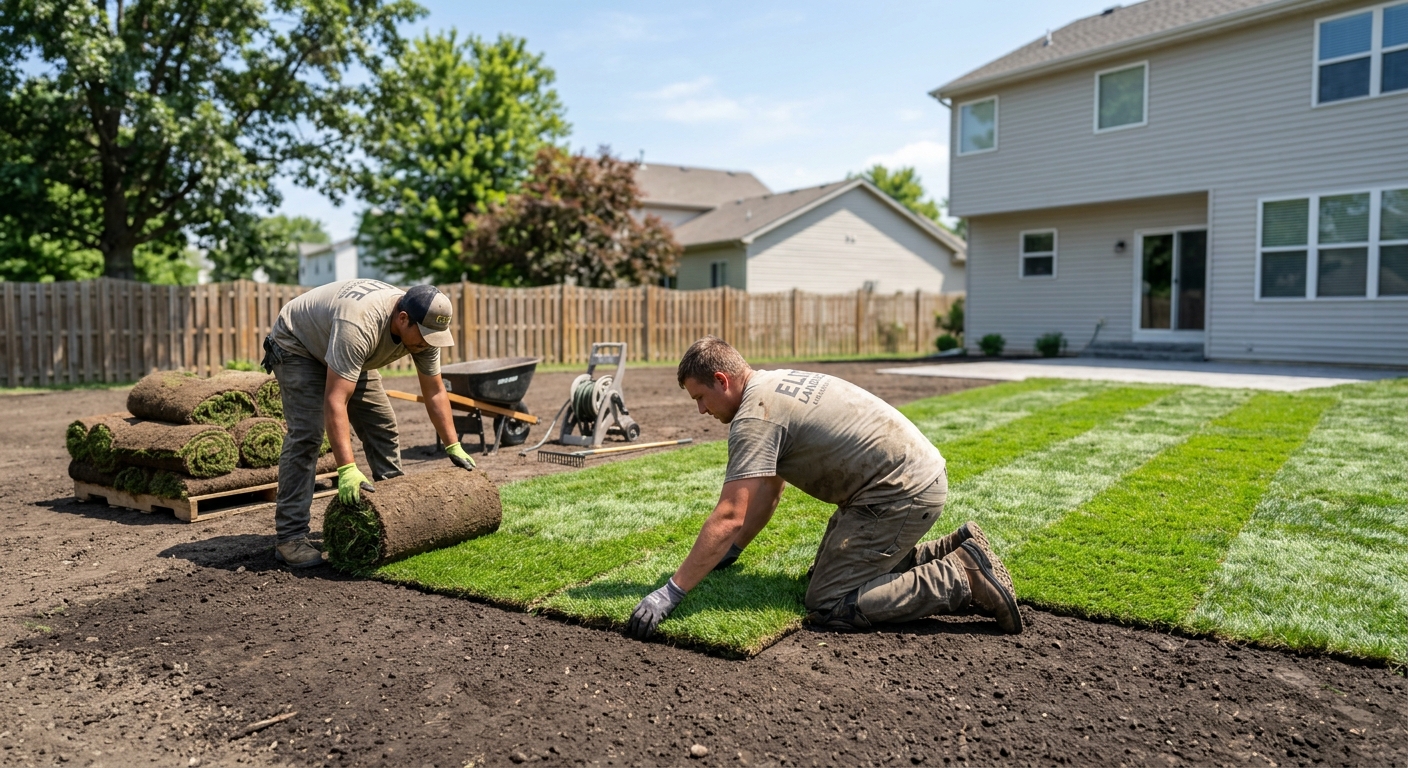
Landscaping options and costs in Colonial Acres
Colonial Acres is where homeowners tend to invest in curb appeal because the neighbourhood’s housing stock makes yards a key part of daily life—if you have room for grass, gardens, or a patio, you can usually see the payoff every day. With a population of 8,163 residents (Statistics Canada, 2021 Census), the area supports a steady contractor presence, but peak-season demand around the Toronto region still affects availability and scheduling. Most properties here also have enough yard space to justify improvements beyond a basic trim: many neighbours choose patios, planting beds, and upgraded drainage to handle freeze–thaw cycles.
Pricing is shaped by the GTA’s planting window and soil behaviour. In plant hardiness zones 6a–7a, we can grow a wide range of woody plants and perennials, but winter lows near –23 to –18°C and spring storms mean more careful prep and winter-robust installation than in milder climates. At the same time, deep frost and freeze–thaw cycles push patios, steps, and retaining walls toward deeper granular bases and reliable drainage. This is one reason Toronto-area quotes for similar scopes can feel “higher per square foot” than you might expect from regions with shorter, less punishing winters.
In Colonial Acres, work is especially in demand near the main residential corridors where lots back onto school and park frontage—those properties typically see earlier interest in sod, walkways, and privacy planting. Below is a clear comparison of common landscape options and typical Colonial Acres price ranges to help you line up like-for-like quotes.
| Service |
Description |
Season |
Price Range |
| Full landscape design and installation |
On-site layout, grading concept, material selection, planting plan, softscape and hardscape build (patio/walkways often included), and cleanup |
Spring to early fall (planning can start year-round) |
$8,000–$40,000 |
| Sod installation (supply, grade, lay, roll) |
Topsoil/grade correction, soil prep, sod supply and placement, rolling, and starter watering guidance |
Late spring through September |
$2,500–$8,000 |
| Lawn seeding (grade, seed, starter fertilizer) |
Minor grading, seed mix selection, raking, seed application, starter fertilizer, and light maintenance instructions |
Spring and early fall (best results after light soil temperatures rise) |
$1,500–$5,500 |
| Interlocking patio or walkway |
Excavation, compacted base and bedding, pavers/stone installation, edging, joint sand, and sealing where specified |
May to October |
$6,000–$30,000 |
| Retaining wall (interlocking block) |
Wall layout, excavation, granular backfill, drainage gravel/weep provisions, block installation, caps, and restoration |
May to October |
$6,000–$30,000 |
| Tree and shrub planting |
Soil amendment, planting pits, staking (as required), mulch rings, and initial watering plan |
Spring and fall (planting windows depend on weather) |
$800–$6,000 |
Prices are estimates only and vary by project scope, site access and material selection.
What affects the price of landscaping in Colonial Acres
In Colonial Acres, it’s common to see the same “lawn + beds + small walkway” project price move by 30–50% depending on how contractors design the solution. The reason is that quotes aren’t only about labour—they reflect climate-driven build requirements (especially frost and drainage), soil conditions, and the market’s supply of experienced crews during the GTA’s busy months. Around Toronto, many contractors run lean during peak weeks, so scheduling, equipment availability, and the time needed for proper granular base prep can change your total even when the visible work looks similar.
Toronto-area frost dates and plant hardiness zones 6a–7a define what we can install reliably and how we protect it. In Prairie regions (Zone 2–4), shorter seasons and drought push designs toward ultra-hardy, drought-tolerant choices; retaining wall base depth also has to reach below the frost line, which can increase excavation and material needs. Coastal BC often supports a longer growing season for lush planting palettes, but heavy rainfall makes drainage and soil structure just as critical. In southern Ontario (your area), the season is moderate, and irrigation is usually most needed during summer dry spells—so irrigation design affects cost more here than in consistently wetter areas.
Concrete examples from local yards: (1) If your lot has clay or imported fill, we may need soil amendment and topsoil to stabilize plant growth; that can shift a tree and shrub planting from the lower end toward the mid-range of the $800–$6,000 band. (2) If you add grading to stop water from pooling near foundations, that grading and drainage can push a hardscape project upward within the $6,000–$30,000 retention/walkway band. (3) Older homes with established drainage patterns often require careful rework so new patios and beds don’t block subsurface flow.
| Price Factor |
Why It Matters |
Cost Impact |
| Yard size in sq ft — the primary cost driver for softscape |
More area means more topsoil prep, seed/sod, edging, and ongoing maintenance materials |
Large yards can multiply labour and materials; softscape typically scales fastest with square footage |
| Grading and drainage work — slope corrections add significant cost |
Fixing pitch prevents water pooling and reduces foundation moisture risk |
Can be a major driver; often increases excavation, haul, and compaction time |
| Drainage bed or French drain installation |
Intercepts runoff where soils hold water and during spring melt |
Adds materials (pipe, gravel, filter fabric) and extra trenching and disposal |
| Plant material tier — native shrubs vs. ornamental vs. mature specimen trees |
Mature stock is heavier, more expensive, and needs better soil volumes and sometimes staking |
Specimen trees can push planting from mid to upper range; labour increases with plant size |
| Hardscape vs. softscape ratio — walls and patios cost more per sq ft than lawn |
Pavers and wall systems require deeper bases and more specialized installation |
Increasing patio/wall area can move the job into the higher hardscaping bands |
| Irrigation system design and installation |
Zones, backflow prevention requirements, and head spacing affect performance |
More zones and complexity increase labour and parts; usually added when sod is installed or beds are large |
| Soil amendment and topsoil required |
Improves rooting and helps clay and compacted soils behave better for grass and perennials |
Costs rise when haul distances are long or when significant removal/replacement is needed |
| Tree removal or stump grinding before new planting |
Clearing affects excavation safety and frees space for correct soil build-up |
Can add separate mobilization and disposal; removal depth also impacts grading |
Permits & regulations in Ontario
In Ontario, most planting and typical softscape work—such as sodding, lawn seeding, mulch installation, shrub and tree planting, and most grading for landscaping—typically does not require a permit for the average homeowner project. However, retaining walls and changes that materially affect lot drainage can trigger approvals depending on the scope and height.
Work that often DOES require a permit: retaining walls above a local threshold (commonly around 1.0 m in many Ontario municipalities) frequently require a building permit, and sometimes supporting drawings engineered for the wall system. Also, if your project includes meaningful grading changes that redirect drainage toward neighbouring properties or tie into storm connections, your municipality may require approval.
Work that typically does NOT require a permit: adding mulch rings, installing a patio or walkway at grade, general bed creation, and routine lawn replacement (sod or seed) usually fall under non-structural landscape work.
How to verify your contractor (step-by-step): (1) Ask for their Ontario business details and confirm they’re properly set up for the work they’re selling; (2) request a certificate of insurance showing general liability and that it names you as the certificate holder where appropriate; (3) for workplaces, confirm coverage documentation and ask whether they carry WSIB/WCB clearance letters; and (4) before any digging for planting holes or wall footings, ensure they arrange utility locates—this is essential in older Toronto-area neighbourhoods where services can be routed unpredictably. Finally, confirm any local water-use bylaw expectations during drought-like conditions (even though Ontario doesn’t have the same restrictions as some dry regions, rules can still tighten during summer dry spells).
Planning a landscape that thrives in Colonial Acres's climate
To plan a landscape that thrives in Colonial Acres, design around the local hardiness reality of zones 6a–7a, Toronto’s freeze–thaw cycles, and the seasonal rhythm of when soil and crews are ready. Start with plant selection: choose native and zone-appropriate species that tolerate winter lows near –23 to –18°C and can handle humid summers without constant fuss. Then match the lawn approach to your timeline. Sod gives instant curb appeal, but sod is typically more expensive—often about 3–4x per sq ft versus seeding—because you’re paying for live turf and the labour to prep and lay it correctly.
Drainage and grading are non-negotiable in the GTA. Even a beautiful garden can fail if water pools near foundations, especially through spring thaw and freeze cycles. For patios and retaining walls, base preparation must be built for frost durability: proper excavation depth, compacted granular layers, and drainage provisions behind walls prevent heaving and settlement over time. Low-maintenance strategies help you reduce annual upkeep without losing curb appeal—mulched shrub borders, groundcovers that suppress weeds, and perennial selections that return reliably year after year.
If you want to manage water smartly, consider rain-garden pockets or targeted drip irrigation for beds—these approaches fit Toronto’s summer dry spells while reducing waste. A practical example: if a 400 sq ft lawn patch can be handled with seeding at roughly a few thousand dollars, switching to sod may push you into the higher $2,500–$8,000 territory for the same area; that price jump is justified when you need immediate wear resistance (kids, pets, entertaining) or when timing makes seeding too risky.
| Element |
Climate Consideration |
Maintenance Level |
Price Band |
| Sod lawn installation |
Best installed after soil warms; needs consistent early watering through establishment before winter |
Low once established; higher watering/monitoring in the first weeks |
$2,500–$8,000 |
| Native perennial garden |
Zone-appropriate plants handle Toronto winters with less winter protection when placed in good drainage |
Medium—annual spring cleanup and occasional edging/topping |
$1,500–$6,000 |
| Mulched shrub border |
Helps moderate soil temperature and retain moisture during humid summers and dry spells |
Low—mulch refresh and light pruning |
$800–$4,500 |
| Interlocking stone patio |
Requires proper base and drainage to survive freeze–thaw cycles |
Low—occasional joint sand refresh and sealing if specified |
$6,000–$30,000 |
| Retaining wall (block) |
Backfill and drainage gravel prevent water pressure and movement during spring thaw |
Low once built correctly; periodic inspection of drainage openings |
$6,000–$30,000 |
| Drip irrigation system |
Delivers water efficiently during summer dry weeks; supports zone-appropriate bed growth |
Medium—seasonal checks and winterization |
$1,800–$7,000 |
How to choose a landscaping contractor in Colonial Acres
Start with verification. For Ontario landscaping work, a legitimate contractor should provide: (1) proof of appropriate business setup and any required documentation for the scope they’re performing; (2) liability insurance (ask for a current certificate of insurance and confirm it covers the work type you’re hiring them for); and (3) WSIB/WCB clearance or coverage documentation where applicable. Don’t just accept a screenshot—ask for the certificate and clearance letter details so you can confirm dates and coverage. If they can’t provide paperwork promptly, that’s a warning sign.
Next, compare 2–3 itemised written quotes. You want labour and materials broken out (excavation, base, stone/pavers, soil amendments, sod/seed, disposal, and any drainage/irrigation components). A lump-sum number can hide quality differences like base depth or whether the contractor includes geotextile, compaction passes, or correct drainage gravel behind walls.
Read the scope carefully for exclusions: is permit pulling included where required for retaining walls? Is disposal/haul-away included for excess soil? What about utility locates costs and responsibility? Clarify whether you’re getting a workmanship warranty (and its length) and whether manufacturer warranties on materials are transferable. Finally, payment schedule matters: never pay more than about 10–15% upfront, and hold a portion until the job is complete and cleaned up.
Get a written start date and an estimated completion window. In Colonial Acres, weather can affect installs, but good contractors build in realistic contingencies for rain and frost-sensitive tasks.
- Ask for an itemised quote with labour + materials and unit quantities (sq ft, linear ft, and plant counts).
- Confirm whether base depth, geotextile, and compaction are included for patios and walkways.
- For retaining walls, ask specifically about drainage gravel, filter fabric, and weep provisions behind the wall.
- Verify current liability insurance and request the COI showing you as certificate holder when appropriate.
- Request WSIB/WCB clearance documentation (or equivalent coverage proof) before work starts.
- Check that utility locates are arranged prior to digging.
- Confirm disposal/haul-away is included if excavation is expected.
- Ask if irrigation is included or if only stub-ups and rough-in are planned.
- Verify plant guarantees: replacement policy if plants don’t survive establishment (and the timeframe).
- Confirm warranty terms: workmanship length, what voids coverage, and how claims are handled.
- Set the payment schedule: no large deposits; holdback until completion and final grade review.
- Get an in-writing timeline and weather contingency approach.
Concrete red flags in Colonial Acres: (1) contractor refuses to provide insurance/coverage documentation; (2) offers a single lump-sum quote without base/soil/drainage details; (3) promises “we don’t need geotextile” or “we’ll do it shallow” on patios/retaining walls; (4) asks for a large upfront deposit (well beyond 10–15%); and (5) can’t clearly explain who handles utility locates, disposal, and permit responsibilities where retaining walls exceed typical height thresholds.
Frequently asked questions — landscaping in Colonial Acres
Sod vs seed — which is better for a Colonial Acres lawn?
For most Colonial Acres homeowners, sod is the better choice when you need a fast, uniform result—especially if your yard is getting daily use soon after installation. Seeding can work very well when you have time to nurse the lawn through establishment, and it’s often more budget-friendly. The bigger practical difference is risk: Toronto-area weather can swing in spring and early fall, so seed performance depends heavily on timing, soil prep, and moisture. For price context, a sod job commonly lands in the $2,500–$8,000 band, while seeding is typically lower for similar areas when grading and cleanup are straightforward. If your yard drains poorly or has heavy clay, addressing drainage first is usually what makes either option succeed.
How much does a retaining wall cost in Colonial Acres?
Retaining walls in Colonial Acres usually fall into the $6,000–$30,000 range, depending on wall height, length, and whether drainage and significant grading are required. The cost drivers aren’t just the blocks—they include excavation, compacted granular backfill, and proper drainage gravel/filter fabric behind the wall so water doesn’t build up during spring melt. If your site needs haul-away, soil replacement, or access equipment, the total can move toward the upper end. Contractors who build to frost-resilient base requirements often cost more up front, but that’s usually what prevents movement and settlement over the years.
When is the best time to landscape in Colonial Acres?
For Colonial Acres and the broader Toronto area, late spring through early fall is the prime window for most installs. Sod and hardscaping (patios, walkways) are typically scheduled from late spring to September to avoid cold-stress and to support proper compaction and curing. Planting—trees and shrubs and many perennials—often works best in spring and fall when temperatures are moderate and plants can establish roots before winter. Winter planning matters too: freeze–thaw cycles are the reason we emphasize base construction and drainage so patios and retaining walls don’t heave. If you’re aiming for the smoothest timeline, book early because peak-season contractor demand can extend lead times.
Do I need a permit for a retaining wall in Ontario?
In Ontario, a permit is commonly required for retaining walls above a local height threshold—often around 1.0 m (3.3 ft) in many municipalities—especially when the wall is considered a structural element. The exact trigger can vary by municipality and how the wall affects grading and drainage. In practical terms for Colonial Acres homeowners: if you’re planning a retaining wall that looks more than “a small edging block job,” ask your contractor to confirm the permit requirement before construction starts. If the wall requires approval, a good contractor should handle the process or clearly tell you what they will and won’t do. Also remember that changes in lot grading that impact drainage toward neighbouring properties can trigger requirements, even when the work seems minor.
How do I improve drainage in my yard?
Drainage improvements in Colonial Acres usually start with diagnosing where the water actually goes during spring thaw and heavy rain—not just where you see pooling. The most common fixes include re-grading (correcting slope away from foundations), installing a drainage bed, or adding a French drain where runoff concentrates. In clay and fill soils, drainage work becomes more important for protecting both grass and hardscape, because freeze–thaw can worsen movement if water sits under patios or behind walls. Your best next step is a contractor site visit to check soil saturation and surface flow, then design a plan that matches your downspouts, swales, and any storm connections. Proper drainage is what keeps patios stable and gives beds a fighting chance.
What is xeriscaping and does it suit Colonial Acres?
Xeriscaping is a landscaping approach that reduces water use by using drought-tolerant plants, efficient irrigation (often drip), and soil/cover strategies that retain moisture. In Colonial Acres, it can absolutely suit your yard—especially in areas that dry out quickly in summer or where you want fewer mowing and watering cycles. That said, “xeric” doesn’t mean no greenery. In Ontario’s zone 6a–7a climate, we still select winter-hardy plants and build for humid summers and cold winters (mulch, good soil structure, and correct placement). If your goal is lower water bills and less upkeep, combining a rain garden or targeted drip with native perennials is often a good balance. A well-designed xeriscape can reduce irrigation demands while still looking full and seasonal.