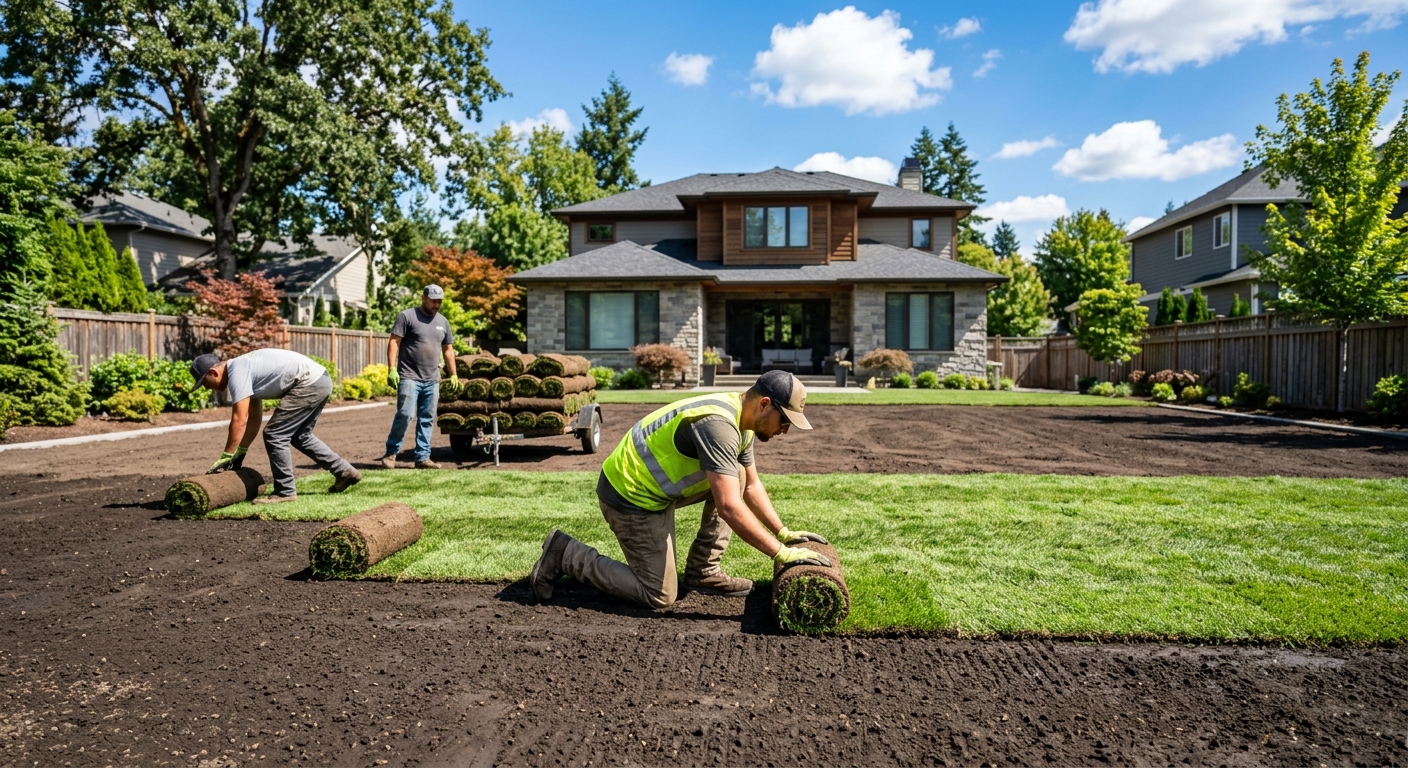
Landscaping options and costs in High Park-Swansea
High Park-Swansea is a neighbourhood where people actually use their outdoor space year-round, from spring cleanups to winter-proof hardscape. With a population of 23,925 (Statistics Canada, 2021 Census), the demand here is steady—especially around family homes where the yard is part of daily life. That matters for pricing, because contractors are busiest in the same mid-spring to early-fall window, and High Park-Swansea homeowners often want upgrades that last through Toronto’s freeze–thaw cycles. The result is that even “similar” projects can price differently based on soil conditions, access, and how much work is needed to correct drainage.
In southern Ontario, we typically work in plant hardiness zones 6a–7a, which is forgiving compared to Prairie climates, but Toronto still brings deep winter frost and seasonal ground movement. Local clay and fill soils can be soft and uneven, so base preparation for patios, steps, and retaining walls often drives labour and aggregate costs. You’ll also see higher scheduling pressure in areas like the Bloor West Village/High Park edge, where many older properties have narrower side yards and mature trees, which increases excavation time and disposal.
Below is a practical comparison of common landscaping scopes you’ll see in High Park-Swansea, with Toronto-area price bands to help you benchmark quotes before you compare contractor proposals.
| Service |
Description |
Season |
Price Range |
| Full landscape design and installation |
Site assessment, layout, plant plan, grading/drainage strategy, softscape and hardscape build (typical backyard) |
May to October (design can start earlier) |
$8,000–$40,000 |
| Sod installation (supply, grade, lay, roll) |
Topsoil/grade correction, sod delivery, install, rolling, starter fertilizer, initial watering guidance |
Mid-spring to early fall |
$2,500–$8,000 |
| Lawn seeding (grade, seed, starter fertilizer) |
Light grading, seeding, starter fertilizer, mulch/blanket as needed, initial maintenance plan |
Spring and early fall (best results) |
$1,200–$5,500 |
| Interlocking patio or walkway |
Excavation, base/subbase, geogrid where needed, joint sand, edge restraints, compacting, finishing |
May to October (weather-dependent) |
$6,000–$30,000 |
| Retaining wall (interlocking block) |
Excavate, compacted granular base, drainage gravel/weep system, block install, backfill, finishing |
May to October |
$6,000–$30,000 |
| Tree and shrub planting |
Soil prep, planting holes, amendment, staking where needed, mulch rings, watering plan |
Spring and fall (with watering support) |
$800–$6,000 |
Prices are estimates only and vary by project scope, site access and material selection.
What affects the price of landscaping in High Park-Swansea
In High Park-Swansea and across the Toronto market, two homeowners can receive quotes that differ by 30–50% for the “same” upgrade because the hidden variables are rarely identical. Yard access (narrow gates, steep slopes, mature trees), soil condition (clay with poor drainage, buried fill, uneven grading), and how much base and drainage work is required for stability all move costs quickly. On top of that, Toronto’s labour schedule is compressed into the frost-free window (roughly May to October), so higher demand during peak weeks can affect availability and installation sequencing.
Hardiness zones and frost timing directly influence both plant choice and construction method. In southern Ontario’s zone 6a–7a, we select woody plants and perennials that can handle winter lows near –23 to –18°C and rebound through spring. For hardscape, freeze–thaw means retaining wall and patio bases need proper depth, compacted granular layers, and often geogrid or deeper footing-level preparation. Compare that to Prairie regions (Zone 2–4), where shorter seasons and drought pressure encourage drought-tolerant planting and simpler layouts; coastal BC (Zone 7–8) can support lush palettes but still demands excellent drainage where rainfall is heavy; dry BC interior areas often require drip irrigation and xeric planting to meet water limits. In Ontario, we generally plan for irrigation during summer dry spells, and we build drainage so water moves away from foundations.
Concrete examples from High Park-Swansea: (1) a sod-only lawn can escalate into full topsoil reconstruction if the ground is compacted or uneven—pushing a $2,500–$8,000 range toward the upper end. (2) a small patio may jump in price if a proper drainage base is added to stop pooling against a basement wall, pushing the work closer to $6,000–$30,000. (3) mature trees nearby can require careful hand excavation and root protection, increasing labour.
| Price Factor |
Why It Matters |
Cost Impact |
| Yard size in sq ft — the primary cost driver for softscape |
More area increases labour hours, materials (seed/sod/topsoil), and watering/maintenance effort |
Can swing total price significantly; larger yards often move projects into higher bands |
| Grading and drainage work — slope corrections add significant cost |
Toronto clay/fill often requires regrading so water doesn’t pool toward foundations |
Often adds substantial labour and material; can raise costs toward the upper end of ranges |
| Drainage bed or French drain installation |
Controls subsurface water and helps patios/walls stay stable through freeze–thaw |
Material and excavation costs can be a major add-on (especially on sloped or damp lots) |
| Plant material tier — native shrubs vs. ornamental vs. mature specimen trees |
Mature specimens cost more and require careful handling, larger planting holes, and sometimes staking |
Can move planting projects from the lower to upper portion of $800–$6,000 |
| Hardscape vs. softscape ratio — walls and patios cost more per sq ft than lawn |
Stone, excavation, compaction, base layers, and edge restraints increase material and labour |
Shifts budgets quickly into the $6,000–$30,000 tier |
| Irrigation system design and installation |
Helps lawns establish and keeps plantings from winter burn or summer drought stress |
Can add thousands depending on zoning, complexity, and backflow requirements |
| Soil amendment and topsoil required |
Improves root zone and drainage; clay sites often need imported topsoil/compost |
Increases material delivery and disposal; pushes costs upward on compacted lots |
| Tree removal or stump grinding before new planting |
Clears space and reduces root competition; roots can complicate excavation |
Can add time and disposal; frequently the difference between a “simple” and “full” install |
Permits & regulations in Ontario
In Ontario, most landscaping work does not require a permit—so things like planting, sodding, seeding, mulch installation, and typical softscape upgrades usually fall under homeowner/contractor workmanship rather than permit approvals. That changes when the work becomes structural or affects drainage in a way that could impact neighbouring properties.
Work that typically DOES require a permit: retaining walls above the local threshold—often around 1.0 m (3.3 ft) depending on the municipality—and in some cases engineered drawings if the wall is higher or bears special loads. Also, any project that changes lot grading and could alter how water drains toward neighbouring properties or into storm connections may trigger an approval requirement. If you plan substantial grading around a foundation, it’s worth confirming before excavation. Utility locates are not optional: call for locates before digging for planting holes, drain runs, or wall footings.
Work that typically does NOT require a permit: replacing sod, laying a walkway, planting shrubs and trees, installing standard garden borders, and most backyard grading that does not redirect drainage.
To verify your contractor in High Park-Swansea, ask for: (1) the Ontario business registration and any applicable trade licensing they hold (if they perform regulated work in your scope), (2) a current certificate of liability insurance (and ensure the effective dates cover your start/completion), and (3) evidence of workers’ compensation coverage (WSIB in Ontario) through a clearance letter or equivalent confirmation. For anything involving excavation and utilities, ensure they coordinate locates and follow safe-dig requirements before starting.
Planning a landscape that thrives in High Park-Swansea's climate
Planning in High Park-Swansea means working with Toronto’s zone 6a–7a winters and the freeze–thaw reality of spring and fall, not fighting it. Start with plant selection: native and zone-appropriate shrubs and perennials establish better with less winter protection, and they’re typically more resilient in Ontario’s weather swings. For lawns, choose sod or seed based on how quickly you want results and how much time you can dedicate to early establishment.
Sod gives instant curb appeal and can reduce the “mud phase,” but it costs more—commonly about 3–4x per sq ft than seeding—because you’re paying for sod harvesting, transport, and skilled installation. Seeding is slower to look finished, but it’s often more budget-friendly and can perform well when you correct grade and keep the seedbed moist during germination. Example: if you’re budgeting a lawn refresh, moving from seeding to sod might add several thousand dollars, but it can be justified if you need a finished look quickly for seasonal use or if existing grade issues are manageable.
Drainage and grading are critical in Toronto. Even a beautiful planting plan fails if water pools near foundations, especially on clay and compacted fill. For hardscape, patio and wall base preparation should be built for frost stability: adequate granular layers, compaction, and proper drainage layers help prevent heaving and settling.
Low-maintenance design strategies reduce yearly upkeep: mulch rings, groundcovers, and well-spaced perennials cut weed pressure and moisture loss. If you’re dealing with drier pockets or you want water-smart design, consider rain gardens (to capture and infiltrate runoff) or targeted xeriscape elements—especially where irrigation is harder to maintain consistently.
| Element |
Climate Consideration |
Maintenance Level |
Price Band |
| Sod lawn installation |
Needs solid grade and good drainage to survive freeze–thaw; establishment care matters in spring |
Medium (regular watering guidance during establishment) |
$2,500–$8,000 |
| Native perennial garden |
Zone-appropriate plants handle Ontario winters and bounce back in spring with less fuss |
Low to medium (mulch top-ups and seasonal pruning) |
$800–$6,000 |
| Mulched shrub border |
Mulch moderates soil temperature swings and helps reduce winter desiccation |
Low (weeding reduced, periodic checks) |
$1,000–$5,500 |
| Interlocking stone patio |
Base depth and drainage prevent movement during freeze–thaw cycles |
Low (occasional joint sand refresh as needed) |
$6,000–$30,000 |
| Retaining wall (block) |
Proper drainage gravel/weep system keeps backfill stable in wet winters |
Low (visual inspection for shifting) |
$6,000–$30,000 |
| Drip irrigation system |
Helps manage summer dry spells efficiently and reduces overwatering on clay edges |
Medium (seasonal adjustments and winterization checks) |
$1,200–$7,000 |
How to choose a landscaping contractor in High Park-Swansea
Choosing the right landscaping contractor in High Park-Swansea starts with verification. For Ontario, confirm they carry liability insurance (request a certificate of insurance and ensure it covers landscaping/excavation activities in your scope). For worker protection, ask for proof of WSIB coverage via a current clearance letter or equivalent WSIB status document—this is especially important when excavation, stone delivery, and heavy lifting are involved. If your scope includes regulated work, ensure they’re appropriately licensed for that portion of the job (and tell them you want the licence details in writing).
Next, get 2–3 itemised written quotes, not just a lump sum. The best quotes break labour and materials apart (topsoil, aggregate, stone, block, geotextile/geogrid, seed/sod, edging, disposal). Carefully check what’s excluded: permit pull responsibility, utility locates, waste hauling, stump grinding, lawn restoration, and cleanup.
On warranties, ask for the workmanship warranty length (often the most important piece) and whether the manufacturer warranty on products is included and transferable. Then review payment terms: never pay more than about 10–15% upfront. A sensible holdback is released after completion and walk-through.
Finally, demand a timeline in writing: proposed start date, weather-dependent milestones, and a completion estimate.
- Provide a certificate of liability insurance with dates matching your project period.
- Show WSIB clearance/coverage evidence before any digging starts.
- List all exclusions (disposal, damaged sidewalks/curbs, stump grinding, soil hauling).
- Confirm utility locates are included and who schedules them.
- Request itemised material quantities (topsoil depth, stone base thickness, block count).
- Ask how they handle Toronto clay—what drainage plan they recommend.
- Get written proof of geotextile/geogrid use when base conditions require it.
- Clarify sod/seeding specs (grass type, seeding rate, fertilizer/starter plan).
- Verify that the scope includes edging restraints and joint sand for interlocking work.
- Ask about how they protect landscaping during establishment (watering plan responsibilities).
- Confirm warranty terms for labour and products, and whether warranties are transferable.
- Use a payment schedule tied to milestones, not large upfront transfers.
Red flags to watch for: (1) quotes that only give a final price with no breakdown of labour vs materials, (2) no proof of WSIB and liability insurance, (3) vague wording like “disposal included” without specifying what’s removed and where it’s hauled, (4) refusal to include base/drainage details for patios and retaining walls (critical in Ontario freeze–thaw), and (5) asking for 50%+ upfront before any site prep begins.
Frequently asked questions — landscaping in High Park-Swansea
How much does landscaping cost in High Park-Swansea?
Landscaping cost in High Park-Swansea typically depends on yard size, site access, and how much drainage/base work is required for stability through Ontario’s freeze–thaw cycles. For many homeowners, a full design-and-install project lands in the $8,000–$40,000 band, especially when you’re combining grading, plants, and hardscape. If the work is more targeted—like lawn replacement or planting only—pricing is usually lower. Sod installs commonly fall around $2,500–$8,000 depending on grade correction and area. Always compare itemised quotes because Toronto-area soil conditions (often clay and fill) can turn a “simple” refresh into a drainage and base improvement job.
What plants thrive in High Park-Swansea's climate zone?
High Park-Swansea sits in southern Ontario’s zone 6a–7a, so we select plants that handle winter lows near –23 to –18°C and bounce back after spring thaw. In practice, that usually means hardy native shrubs and perennials, plus woody ornamentals that don’t require heavy winter wrapping. Planting in fall (with good mulch coverage and watering support) or spring gives roots a chance to establish before summer stress. If you have low spots that stay damp, choose moisture-tolerant species; for drier patches, we’ll steer you toward plants that cope with Ontario summer dry spells without constant irrigation. A good contractor will also match plants to your sun exposure and soil drainage, not just “zone” on a label.
Sod vs seed — which is better for a High Park-Swansea lawn?
In High Park-Swansea, sod is usually better when you need fast, finished results or you want the least time with a patchy lawn. It also helps prevent erosion on newly graded areas, provided the grade and drainage are corrected. However, sod costs more—often about 3–4x the per-square-foot cost of seeding—because you’re paying for harvested turf plus installation labour. Seeding is a great option if you can handle a longer “establish” period and you keep the seedbed consistently moist during germination. If your lawn base is uneven or compacted, both options benefit from proper grade correction; otherwise you may pay again for rework.
How much does a retaining wall cost in High Park-Swansea?
A retaining wall in High Park-Swansea commonly prices in the $6,000–$30,000 range, depending on wall height, length, site access, and—most importantly—how much drainage and excavation is required behind it. Proper Ontario construction means a stable granular base and a drainage plan (often drainage gravel and weep pathways) to manage backfill water during winter wet periods. Costs rise when the contractor needs to excavate deeper due to soil conditions or when access is tight and labour-intensive. Also, if the wall is above a local threshold (often around 1.0 m), a permit and sometimes additional documentation may be required, which can affect both timeline and total cost.
When is the best time to landscape in High Park-Swansea?
For most installations in High Park-Swansea, the best window is late spring through early fall—roughly May to October—because crews need workable soil and weather that supports compaction, curing, and plant establishment. Sod and interlocking work are typically scheduled during these months for the best results. For planting, fall can be excellent in Ontario because temperatures cool down while the ground still has warmth for roots to settle; spring is also fine, especially when you can water during establishment. Retaining walls and patios should be coordinated around freeze–thaw risk—finish strong before the weather turns. A reputable contractor will also explain weather-dependent milestones and provide a written timeline.
Do I need a permit for a retaining wall in Ontario?
In Ontario, you often need a permit for a retaining wall when it exceeds a local height threshold—commonly around 1.0 m (3.3 ft) in many municipalities—especially if the wall is structural or requires engineered considerations. That said, the exact trigger can vary by local requirements, so confirm based on your wall’s planned height and location. If your wall work includes significant grading changes that could redirect drainage toward a neighbour or storm connection, additional approval requirements may also apply. For a smooth project in High Park-Swansea, ask your contractor to clearly identify whether permits are included in the quote and to coordinate utility locates before any excavation begins.