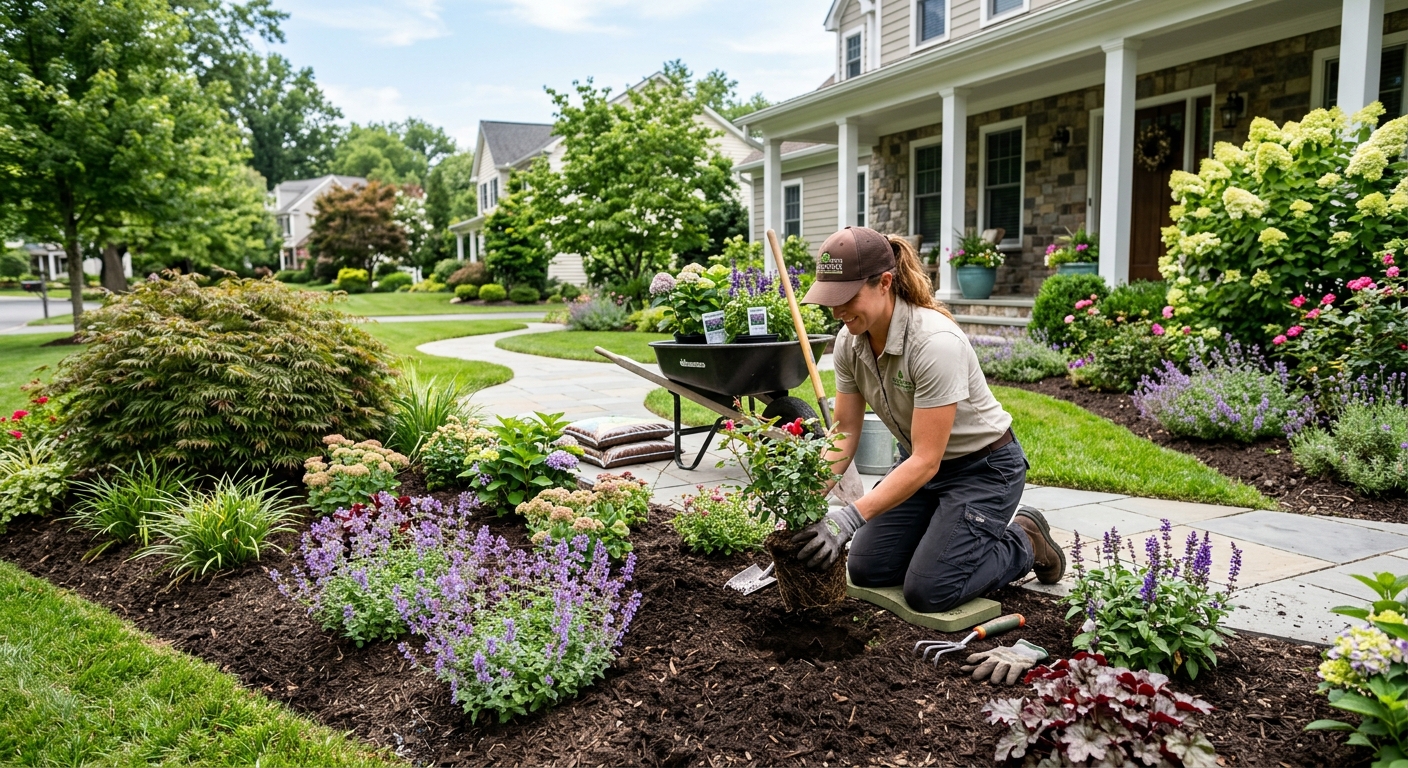
Landscaping options and costs in Lincoln
Landscaping in Lincoln is a great way to make the most of your property—especially since Lincoln’s housing stock is heavily oriented toward single-detached homes (69.8% of dwellings), which usually means you have more room for both softscape and hardscape improvements. With homeowner households making up 84.3% of households, many residents choose to invest in curb appeal upgrades like patios, planting beds, and lawn renovations rather than leaving the yard “as-is.”
In the Hamilton–Niagara Peninsula region, we’re typically in plant hardiness zones 6b–7a, with a growing season that generally runs from late April/early May to mid–October. That impacts scheduling and pricing: softscape work has to fit the frost-free window, while hardscaping and base prep often require careful planning around freeze–thaw and drainage so patios don’t heave later. Labour availability can also tighten around peak spring and early fall install dates, particularly in neighbourhoods like Vineland Station/nearby Vineland areas where larger detached yards are common and crews are busy.
Costs can also swing based on what your yard needs first: excavation, grading, and drainage are often the hidden “driver” behind both patios and retaining walls. As a baseline, many Lincoln projects land within the common Southern Ontario ranges for landscaping design & installation ($5,000–$50,000) and tree/garden planting (often $50–$1,500 per item depending on size). Below is a practical comparison table to help you translate your goals into a realistic budget.
| Service |
Description |
Season |
Price Range |
| Full landscape design and installation |
Site walk, concept + planting plan, grading/soil specs, and installation of softscape and/or select hardscape |
Spring to early fall |
$5,000–$50,000 |
| Sod installation (supply, grade, lay, roll) |
Topsoil/leveling, sod delivery and placement, rolling, starter watering plan |
Late spring to early fall |
$2–$7 |
| Lawn seeding (grade, seed, starter fertilizer) |
Minor grading, seed mix, starter fertilizer, light raking, and first-weeks watering guidance |
Spring and early fall |
$2–$7 |
| Interlocking patio or walkway |
Excavation, geotextile, base stone, edge restraints, interlock, and finishing touches |
Spring, summer, early fall |
$40–$150 |
| Retaining wall (interlocking block) |
Block wall system with proper base, reinforcement where needed, drainage stone, and cap/finish |
Spring to early fall |
$40–$150 |
| Tree and shrub planting |
Planting, soil amendment, staking (as required), mulching, and watering setup guidance |
Spring and fall |
$50–$1,500 |
Prices are estimates only and vary by project scope, site access and material selection.
What affects the price of landscaping in Lincoln
In Lincoln, the same “idea” can come in 30–50% apart across the Hamilton–Niagara Peninsula—mainly because contractors price for what’s under the grass: excavation depth, drainage complexity, and how much labour is needed to get base conditions correct. Even though Southern Ontario offers a moderate season, the calendar still dictates cost because softscape installs must land between freeze risk and the mid–October window, while base work that’s rushed (or not compacted properly) can fail after freeze–thaw cycles.
Plant hardiness zone 6b–7a also matters for both materials and labour. We can grow a broader palette than prairie regions, but winter wind exposure and freeze–thaw still require good root zone prep and winter-ready planting spacing. That’s different from prairie areas (zone 2–4) where short growing seasons and drought drive more drought-tolerant, wind-hardy choices—and usually simpler planting layouts. Coastal BC (zone 7–8) can stretch the planting season, but heavy rainfall means drainage design is often more engineering-focused, and irrigation choices differ. In Southern Ontario like Lincoln, costs are shaped by excavation in mixed glacial soils, quality base aggregates, and efficient irrigation during summer dry spells—without the strict rationing you may hear about in the drier parts of the country.
Concrete Lincoln examples: (1) If your patio base needs deeper frost-resilient aggregates to reduce heaving, that can push an interlocking walkway from a simple scope into the higher end of the $40–$150 band. (2) Older homes—41.2% built before 1981—often come with mature trees, compacted beds, or drainage issues that require extra grading and haul-away, which can add to a design & installation budget that typically starts around $5,000. (3) Sites near existing foundations can require more careful drainage bed work, increasing labour compared with open yard installs.
| Price Factor |
Why It Matters |
Cost Impact |
| Yard size in sq ft — the primary cost driver for softscape |
More area means more topsoil/seed or sod, more edging, and more labour time |
Small change in area often shifts total budget by thousands |
| Grading and drainage work — slope corrections add significant cost |
Correct slopes protect foundations and prevent standing water after spring melt |
Can add a large one-time excavation and labour premium |
| Drainage bed or French drain installation |
Helps move water away from lawn and hardscape bases |
Raises cost more than most homeowners expect |
| Plant material tier — native shrubs vs. ornamental vs. mature specimen trees |
Size at planting affects price and planting logistics (staging, equipment, staking) |
Mature specimens can move you into higher ranges quickly |
| Hardscape vs. softscape ratio — walls and patios cost more per sq ft than lawn |
Stone/gravel base prep and interlock work is labour- and material-intensive |
Even modest patios/walls can dominate the total budget |
| Irrigation system design and installation |
Zones, head spacing, and winterization add complexity; also improves establishment |
Often a mid-to-upper add-on depending on coverage |
| Soil amendment and topsoil required |
Clay or sandy pockets may need importing and organic amendment for root health |
Can increase haul-away/import and labour costs |
| Tree removal or stump grinding before new planting |
Impacts access, hauling, and base stability for patios and walls |
Typically increases cost and affects scheduling |
Permits & regulations in Ontario
In Ontario, most landscaping tasks like planting, sodding, and typical softscape installations usually do not require a permit. You can generally expect to proceed with garden bed preparation, seeding, mulch installation, and standard lawn work without paperwork.
Where permits often come into play is with larger structural or drainage-changing work. Retaining walls above a common municipal height threshold—typically around 1.0 m (3.3 ft) in many areas—may require a building permit and sometimes engineered drawings. Also, if you plan changes to lot grading that alter how water flows (for example, redirecting runoff toward a neighbouring lot or connecting toward storm infrastructure), approvals may be triggered. For anything involving excavation for wall footings, drainage runs, or new planting pits, you should confirm utility locates before digging.
For Lincoln homeowners verifying a contractor properly, follow this step-by-step approach:
- Check the contractor’s business listing/licensing status through the province’s or applicable online registry where their category is listed.
- Request a current certificate of insurance (liability) and confirm the coverage limits are appropriate for your scope.
- Ask for WSIB/WCB clearance documentation (or the equivalent coverage proof they carry) and ensure it’s current.
- Verify they include disposal/haul-away in the scope if excavation is involved.
- Confirm the plan for drainage and winter-ready base prep, since freeze–thaw in Lincoln can move improperly compacted materials.
If you’re unsure about a wall height or grading change, ask your contractor to confirm what approval steps are needed before starting.
Planning a landscape that thrives in Lincoln's climate
To plan landscaping that thrives in Lincoln, design around zone 6b–7a conditions, Lincoln’s typical spring-to-fall working window, and the reality of freeze–thaw winters. Start with plant selection: choose species suited to Southern Ontario that can handle winter wind and periodic saturated periods in spring. Native and zone-appropriate shrubs and perennials usually need less babysitting than “borderline” ornamentals, and they’re often easier to winter-protect with sensible mulch depth and correct spacing.
For lawns, the sod-versus-seed choice comes down to cost, schedule, and how quickly you want results. Sod gives instant coverage and reduces erosion on graded slopes, but it often runs roughly 3–4x the cost per sq ft compared with seeding once you include preparation. If you’re working within a budget band, that matters: seeding is typically the lower-cost route (commonly referenced at $2–$7 per sq ft in pricing bands), while sod commonly lands toward the higher end of those figures because of supply and labour intensity.
Drainage and grading are non-negotiable in Hamilton–Niagara. Even a beautiful planting plan will struggle if water pools near the foundation or stays trapped in low spots. For hardscape like patios and retaining walls, base preparation must account for frost action: proper depth, compacted aggregates, and a drainage layer reduce the risk of heaving and movement after winter.
Low-maintenance strategies—mulched shrub borders, groundcovers, and perennial massing—reduce annual upkeep while keeping curb appeal. Where water is a concern during summer dry spells, rain-garden pockets and efficient drip irrigation can help manage runoff and support planting establishment without creating a constant watering schedule.
For example, if you’re deciding between a basic lawn fix and a more durable approach: spending more on correct base grading for a small patio can be justified because it prevents long-term settlement. A poorly prepared patio might not fail immediately, but Lincoln freeze–thaw can reveal issues within a couple of seasons—often costing more later than doing drainage and base depth correctly the first time.
| Element |
Climate Consideration |
Maintenance Level |
Price Band |
| Sod lawn installation |
Best during late spring/early fall while roots establish before cold snaps |
Low to moderate (watering the establishment period) |
$2–$7 |
| Native perennial garden |
Zone-appropriate plants tolerate winter wind and spring melt cycles with proper mulch |
Moderate (seasonal pruning and weed control) |
$50–$1,500 |
| Mulched shrub border |
Deep mulch buffers freeze–thaw and helps retain moisture through summer dry spells |
Low (top-up mulch 1x–2x per year) |
$50–$1,500 |
| Interlocking stone patio |
Requires compacted base and frost-resilient drainage to prevent heaving |
Low (occasional cleaning and joint maintenance) |
$40–$150 |
| Retaining wall (block) |
Needs correct base depth and drainage stone behind the wall |
Low (periodic inspection of drainage and alignment) |
$40–$150 |
| Drip irrigation system |
Helps during summer dry spells; needs winterization for freeze safety |
Low to moderate (seasonal adjustments) |
$5,000–$50,000 |
How to choose a landscaping contractor in Lincoln
Choosing the right landscaping contractor in Lincoln starts with proof you can rely on. First, ask for their Ontario business details and verify their licensing/category where applicable. Next, request a current certificate of insurance (liability) and confirm the coverage matches your project size—patios and retaining walls have higher risk than simple planting. Also ask for WSIB/WCB coverage documentation (or equivalent coverage proof). You want these documents dated and current before work begins; don’t accept “I’ll get it later.”
Then, get 2–3 itemised written quotes. The best quotes separate labour and materials rather than lump sums—especially for excavation, base aggregates, geotextile, drainage stone, interlock, and plants. Read the scope carefully: what’s excluded (tree removal, stump grinding, topsoil import, disposal/haul-away, winter protection, irrigation winterization)? Is the permit pull included if a wall height triggers approval? Clear answers prevent surprises.
Warranty matters too. Confirm workmanship warranty length (how long they stand behind installation), and understand product/manufacturer warranties on plants and hardscape materials—plus whether any warranty transfers to you as the homeowner.
For payment, never pay more than about 10–15% upfront. Use a holdback until completion and walk-through acceptance. Finally, get a written start date and completion estimate that accounts for weather and Lincoln’s freeze–thaw patterns.
- Confirm they will do on-site measures and a documented plan, not just a verbal estimate.
- Ask how they handle drainage and compaction for hardscape base prep.
- Require an itemised breakdown for disposal/haul-away if excavation is involved.
- Check that utility locates are arranged before digging.
- Verify insurance and WSIB/WCB paperwork dates before scheduling.
- Ask what plants are included (common + botanical names, sizes, and spacing).
- Confirm edging details and restraint type for interlock.
- Request a written timeline including interim milestones.
- Clarify warranty terms in writing and who honours it.
- Ask about irrigation coverage and winterization if included.
- Check that turf works include grade correction and starter fertiliser/soil prep.
- Ensure the quote states access limits (parking, gates, walkway distances) and impacts to pricing.
Red flags in Lincoln to watch for: quotes that aren’t itemised for base/grading, promises to install a retaining wall without discussing drainage stone and proper base depth, no proof of insurance/WSIB/WCB, vague timelines that ignore weather risk, and requesting large upfront payments beyond 10–15%.
Frequently asked questions — landscaping in Lincoln
How do I find a licensed landscaper in Lincoln?
Start by asking Lincoln contractors for their current Ontario business details and proof of liability insurance. Then request WSIB/WCB coverage documentation (or equivalent proof) before any scheduling. A good contractor will provide certificates dated for the current season and will explain exactly what trade work they’re responsible for on your project (softscape vs. any structural elements). Next, ask for recent references that match your yard type—detached-home properties in Lincoln often involve larger softscape areas and drainage attention near foundations, so references should be similar. If you’re comparing bids, confirm they’re willing to do utility locates for excavation and to provide an itemised scope. A reputable firm should make this verification process simple.
How much does landscaping cost in Lincoln?
Landscaping costs in Lincoln typically vary based on yard size, excavation, drainage, and the mix of softscape and hardscape. For many homeowners, design and installation commonly falls within the $5,000–$50,000 range depending on complexity and whether you’re adding patios, retaining walls, or a full planting plan. Lawn work also varies: sod installation is commonly budgeted in the $2–$7 per sq ft band in pricing references, while seeding generally targets the lower end of that same band. Tree and shrub planting is often priced per item, commonly referenced at $50–$1,500 depending on size. Because Lincoln has freeze–thaw cycles, drainage and base prep can add cost—but it’s the part that prevents movement and settlement later.
What plants thrive in Lincoln's climate zone?
Lincoln sits in plant hardiness zones 6b–7a, so you can grow many hardy deciduous trees, ornamental grasses, and flowering shrubs that tolerate winter cold and spring melt. Choose varieties suited to Southern Ontario rather than borderline ornamentals—especially in windy spots where winter desiccation can damage foliage. Native perennial gardens and mulched shrub borders typically do well when paired with correct spacing and mulch depth for freeze–thaw protection. Also consider drainage: areas that stay wet in spring may need more moisture-tolerant plant selections or a drainage bed. If you’re trying to reduce watering during summer dry spells, ask about drought-tolerant perennials and efficient drip irrigation zones. A contractor who understands the Hamilton–Niagara Peninsula growing window (late April/early May through mid–October) can align plant selection with your install timing.
Sod vs seed — which is better for a Lincoln lawn?
Sod is usually best when you want immediate visual results, you’re renovating a slope where erosion control matters, or you have a tight timeline. Seeding is often more cost-effective and works well when you can manage establishment watering and avoid heavy foot traffic during germination. In Lincoln, the key is aligning your choice with the frost-free window—late spring/early fall is when either option performs best. Price-wise, sod is commonly referenced in the $2–$7 band per sq ft, and seeding is often positioned similarly in price references but usually costs less once you account for material and labour differences. If your lawn area needs grading correction, both sod and seed benefit from proper topsoil and drainage fixes; otherwise, either method can struggle after freeze–thaw.
How much does a retaining wall cost in Lincoln?
Retaining wall pricing in Lincoln depends heavily on wall height, length, access for equipment, and—most importantly—drainage and base depth. Many estimates land within the $40–$150 per sq ft band in the common pricing references for interlocking block retaining walls, but longer walls or more complex drainage requirements can raise the total. If a wall exceeds a typical threshold (often around 1.0 m/3.3 ft in many municipalities), you may need a permit and possibly engineered details, which can affect the budget and timeline. Also, older properties sometimes require extra groundwork due to existing compacted soils or prior drainage problems. A solid base and drainage stone are not “upsells” here—they’re what prevent heaving and movement in freeze–thaw winters.
When is the best time to landscape in Lincoln?
For Lincoln, the best planting and lawn establishment windows are late April/early May through mid–October, when frost risk is reduced and soil temperatures support root growth. Spring is ideal for trees, shrubs, and perennial planting, while early fall can be excellent for establishing plants with less heat stress. For sod and seeding, late spring and early fall are typically safest—seed germination and sod rooting both depend on consistent moisture before cold weather. Hardscape work like interlocking patios and walkway bases is often scheduled in spring through early fall so installers can achieve proper compaction and drainage while weather cooperates. If you’re planning a retaining wall, allow extra time for base preparation and any required approvals. This scheduling approach fits the Hamilton–Niagara Peninsula’s seasonal rhythm and helps reduce winter damage risk.